
Time Management and Prioritization
Everyone at a dealership is busy — the question is whether they’re busy on the right things. The core skill isn’t cramming more in; it’s prioritizing by what matters, protecting time for it against constant interruptions, and knowing the difference between motion and progress, especially when the season turns everything to chaos.
Important vs. urgent
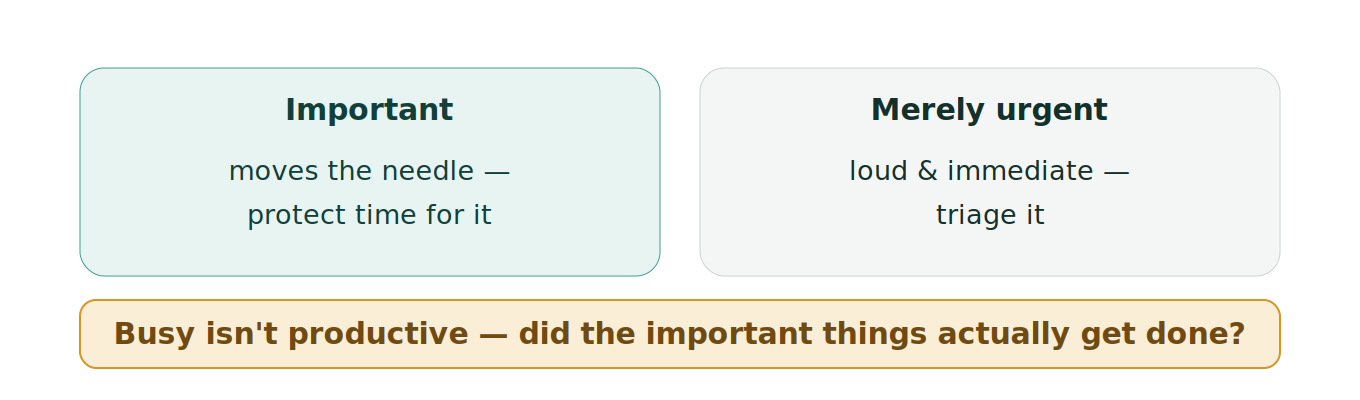
The trap that eats most people’s days is treating everything urgent as important — reacting to whatever’s loudest (the ringing phone, the walk-in, the fire) while the important-but-not-urgent work (the follow-up, the planning, the prevention) never gets done. Prioritizing means separating important (moves the needle, has real consequences) from merely urgent (loud and immediate), and protecting time for the important even when the urgent is screaming. The salesperson who spends every day reacting and never follows up on leads, the manager who firefights and never plans — both are busy and both are losing ground. Do the important, don’t just chase the urgent.
Manage the interruptions and the season
A dealership is an interruption machine — phones, walk-ins, coworkers, the unexpected down machine — and letting every interruption own your day means the important work never happens. Managing this means protecting blocks of time for focused work where possible, handling interruptions efficiently (quick triage: does this need me now, or can it wait or go to someone else), and not letting “available to everyone constantly” mean “productive on nothing.” The seasonal crush makes this harder and more important: during planting and harvest the volume spikes and everything’s urgent, so knowing what genuinely can’t wait versus what can is exactly the skill that keeps the peak from becoming chaos.
Busy isn’t productive
The final distinction: busy (lots of activity, motion, hours) is not the same as productive (the important things actually got done). It’s easy to work a long, frantic day and accomplish little that mattered, and easy to feel virtuous about being slammed. The measure isn’t how full the day felt but whether the things that move the business and serve customers got done. Planning the day around a few real priorities, protecting time for them, and ending by asking “did the important things happen” beats running hard in every direction. This matters even more in season, when the temptation to just react is strongest and the cost of dropping the important things is highest.
Where it goes wrong
- Chasing whatever’s loudest instead of what’s important.
- Letting constant interruptions own the whole day.
- Confusing being busy with being productive.
- Dropping the important work entirely when the season gets frantic.
Related
Teamwork across departments · The seasons of ag · Managing stress and the seasonal grind · Problem solving and critical thinking.