
OEM Captive Finance
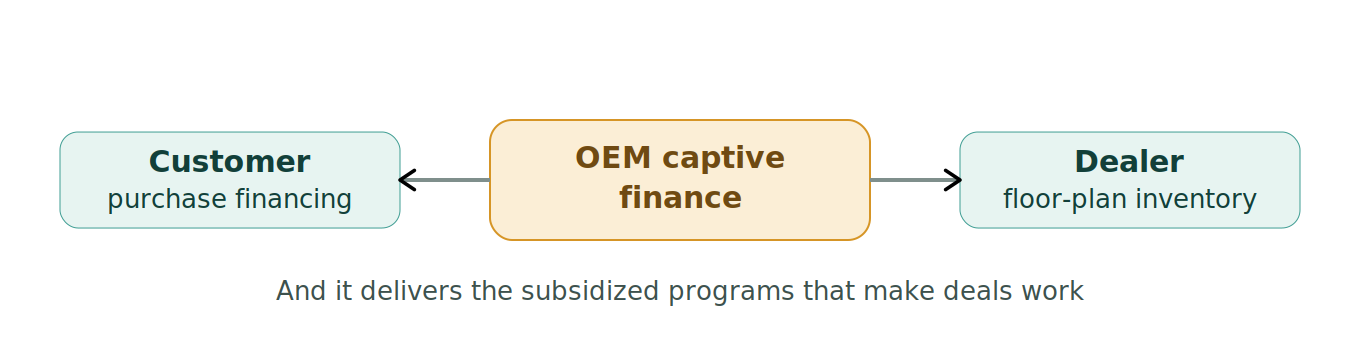
The manufacturer’s own finance arm — the captive — is central to how equipment deals get done, on both sides of the transaction. It finances the customer’s purchase and often the dealership’s own inventory, and it’s the vehicle for the subsidized programs that make deals work.
Captive finance on both sides
The OEM’s finance company (John Deere Financial, CNH Industrial Capital, AGCO Finance, and the others) does two things at once: it provides retail financing and leasing to customers buying the brand’s equipment, and it provides the floor-plan financing that lets the dealership stock inventory. So the same captive is behind the customer’s loan and the dealer’s carrying cost — which is part of why the OEM relationship is so integrated and why the captive’s programs move so many deals.
Why deals run through the captive
The captive is usually where the subsidized programs live — the low-rate and zero-rate offers, waivers, and seasonal deferrals the OEM funds to move product. Those programs are often what actually makes a deal pencil, and they’re the captive’s tool. The captive also knows the equipment and the ag business, structures to the seasonal cash cycle, and integrates with the dealership’s systems — advantages an outside lender may not match. This is why F&I reaches for the captive program first on most deals.
Captive vs outside financing
The captive isn’t the only option — banks, credit unions, and ag lenders finance equipment too, and sometimes offer a better rate or terms for a particular customer, especially outside a subsidized-program window. The job is knowing when the captive’s subsidized program is the best deal for the customer (usually when one’s running) and when an outside lender fits better, rather than defaulting to one without comparing. Serve the customer’s best financing, and use the captive’s programs where they win.
Where it goes wrong
- Not reaching for the captive’s subsidized program when one would make the deal.
- Defaulting to the captive without comparing when an outside lender fits better.
- Overlooking that the captive finances both the customer and the dealer’s inventory.
- Quoting financing without knowing the current captive programs.
Related
How dealers and manufacturers work together · Subsidized financing, waivers, and buydowns · Structuring deals · Credit applications and approval.
(General information, not financial advice; customers should consult their own advisors.)