
Labor Law and Compliance
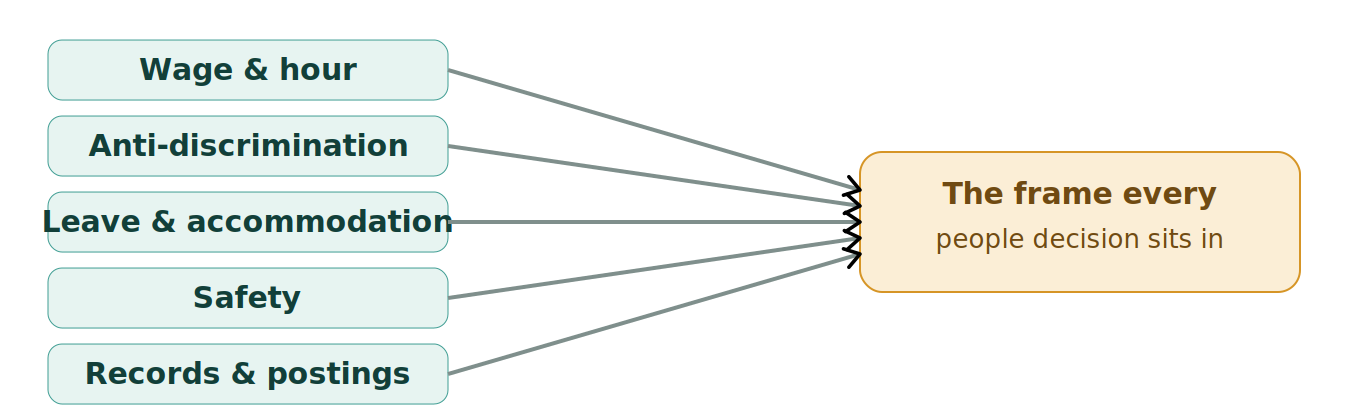
Employment law is the frame every people decision operates inside, and getting it wrong carries real cost — back pay, penalties, lawsuits, and reputational damage. This isn’t legal advice and the specifics vary and change; the point is to know the major areas well enough to stay inside the lines and to recognize when to get proper guidance.
The major areas to respect
A handful of areas cover most of the risk. Wage and hour: paying at least minimum wage, paying overtime correctly where it applies, and classifying workers correctly (employee vs. contractor, exempt vs. non-exempt) — misclassification and unpaid overtime are common, expensive mistakes. Anti-discrimination and harassment: hiring, pay, promotion, and treatment free of discrimination based on protected characteristics, and a workplace free of harassment, with complaints taken seriously. Leave and accommodation: family and medical leave and disability accommodation where they apply. Safety: the OSHA obligations. Records and postings: required documentation, notices, and retention. Knowing these exist and applying the dealership’s compliant policies is the baseline.
Consistency is the practical defense
Beyond knowing the rules, the everyday protection is consistency — applying policies, discipline, pay, and opportunity the same way for everyone, because inconsistent treatment is where discrimination claims and unfairness live. Coming down hard on one person for what another gets away with, or varying terms by who someone is rather than what they did, creates both the reality and the appearance of discrimination. Consistent, documented, policy-based decisions are fair to people and defensible if challenged. Most compliance trouble isn’t a manager intending to break the law; it’s inconsistent, undocumented, off-the-cuff handling that a pattern later exposes.
Know your limits and get guidance
The specifics of employment law vary by location and situation and change over time, so the professional stance for anyone who isn’t an HR or legal specialist is to follow the dealership’s established policies, document decisions, and get proper guidance on anything serious or unclear — a termination, a harassment complaint, a classification question, an accommodation request. Guessing on these is exactly how expensive mistakes happen. Recognizing when a situation needs HR or legal input, rather than winging it, is itself a core compliance skill. When in doubt, ask before you act.
Where it goes wrong
- Misclassifying workers or getting overtime wrong.
- Inconsistent treatment that creates discrimination exposure.
- Handling a termination, complaint, or accommodation off the cuff.
- Guessing on a serious or unclear issue instead of getting guidance.
Related
What HR does in a dealership · Documentation and discipline · Your rights and responsibilities · Workplace safety fundamentals.
(General information, not legal advice; employment law varies and changes — consult HR or qualified counsel on specific situations.)