
Stock, Daily, and Special Orders
Not every order is the same, and matching the order type to the situation controls cost and keeps customers served. The expensive mistake is putting a routine part on an emergency order — paying premium freight for something the next stock order would have covered.
The three order types
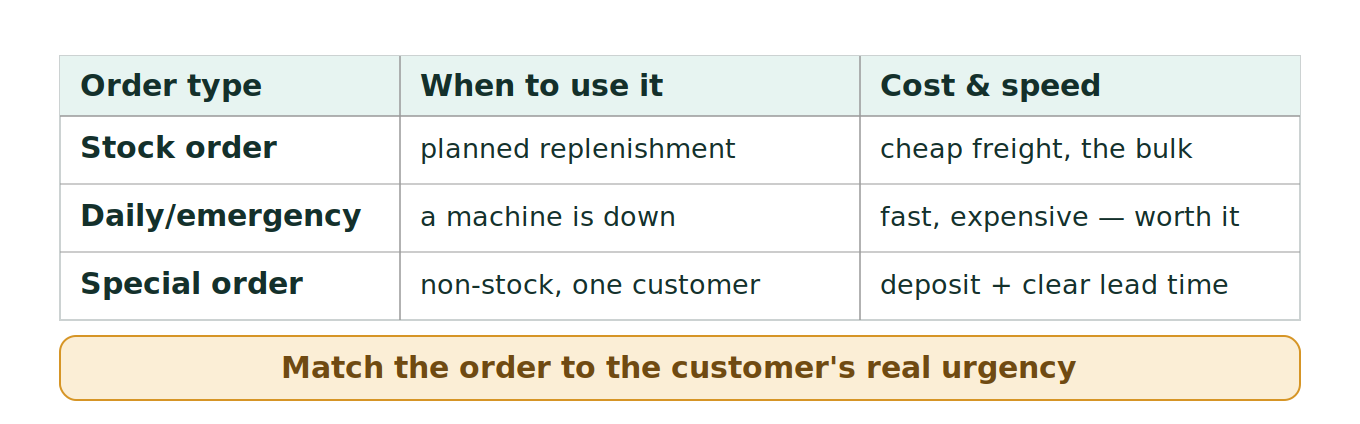
Stock orders replenish inventory on a schedule at the best freight and terms — the economical backbone of purchasing. Daily (or regular) orders catch the fast-turn replenishment and back-orders between stock orders. Emergency/expedited orders get a needed part fast at premium cost, justified only when the customer’s genuinely down and waiting. Special orders bring in a non-stocked part for a specific customer or job.
Don’t emergency-order what can wait
The cost discipline: an emergency order is premium freight, and using it for a part that isn’t actually holding up a down machine burns money for no reason. Ask whether the customer is truly waiting on it or whether the next stock or daily order covers it in time. Emergency freight is for the harvest breakdown, not for restocking a shelf.
Manage special orders to the customer
A special order exists because someone’s waiting, so it gets tracked and the customer notified the moment it lands — not shelved into general stock where it disappears. And a deposit on a non-returnable special order protects the department from eating a part the customer never picks up.
Where it goes wrong
- Emergency-ordering a part that isn’t holding up a down machine.
- Using expedited freight to restock what a stock order covers.
- Losing a special order into general stock while the customer waits.
- Special-ordering non-returnable parts without a deposit.
Related
Shipping, receiving, and transfers · Inventory basics · Returns, cores, and warranty parts · Serving the counter.