
Filing Warranty Claims and Passing Audits
Warranty work is done first and paid later, only if the claim holds up — and the OEM audits, so a claim that doesn’t match its rules gets denied or charged back, leaving the dealership having repaired a machine for free. This is where real money is won and lost, on documentation discipline.
The claim has to tell one consistent story
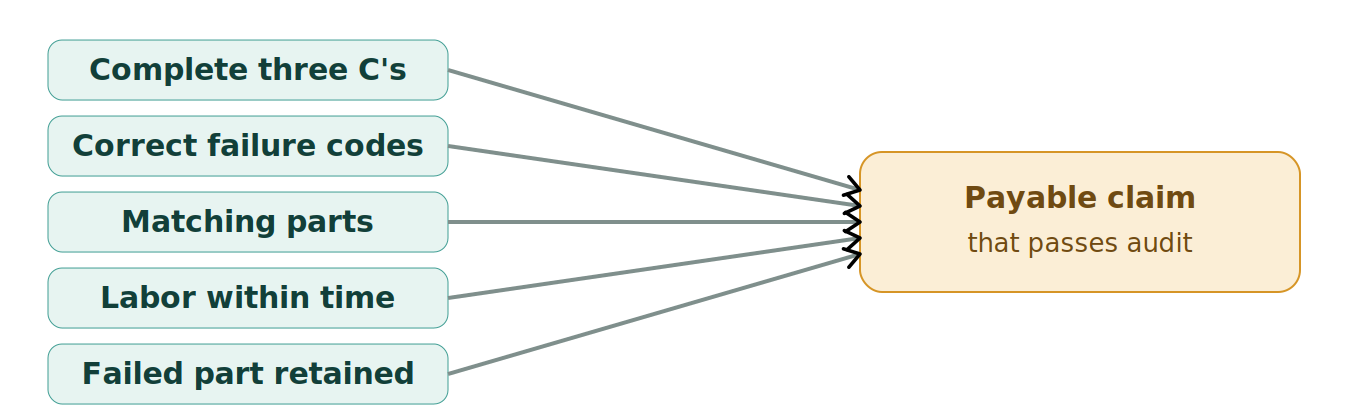
A payable claim ties together complete three C’s (complaint, cause, correction), the correct failure codes, the parts used, and labor within the allowed time, all consistent with each other and with the OEM’s requirements. When the cause doesn’t match the parts, or the labor exceeds the standard without justification, or the story is vague, the claim fails. Write the work order as if an auditor will read it — because on warranty jobs, one will.
Retain the failed part
Warranty parts often have to be kept and returned to the manufacturer for inspection, and a claim can be denied if the failed part isn’t produced. Tag, store, and track warranty parts by the OEM’s process, because scrapping or losing one can sink the whole claim after the labor’s already spent. The parts department’s warranty-part handling and the shop’s documentation are the same money.
Audits claw back, so build the habit
The OEM audits claims and can charge back money months later if the documentation doesn’t hold up. That makes warranty a running discipline, not a one-time filing: consistent, accurate documentation on every claim, retained parts, and labor recorded honestly against the standard. Shops that treat it casually do free work for the manufacturer; shops that treat it as the money it is get paid and pass audits.
Where it goes wrong
- Filing a claim where the cause, parts, and labor don’t line up.
- Vague documentation that can’t support the claim.
- Scrapping or losing a retained warranty part.
- Treating warranty filing as paperwork instead of the money it is.
Related
Warranty policy and coverage · Work orders and documentation · Returns, cores, and warranty parts · How dealers and manufacturers work together.