
Service Financials and Labor Margin
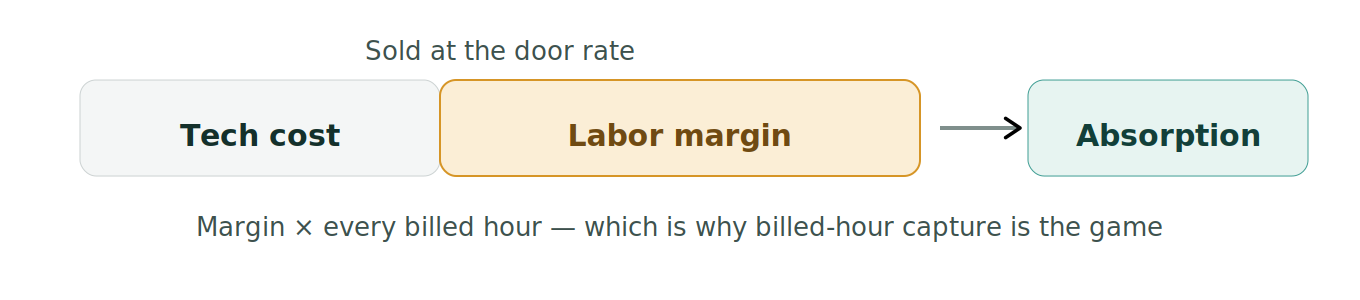
The service department is a profit center, not a cost of doing business, and the biggest single contributor to the absorption that carries the dealership. Its money is made on the spread between what labor is sold for and what the technician is paid, multiplied across every billed hour.
Labor margin is the engine
The shop sells a technician’s time at a door rate well above what the tech is paid, and that spread — across all the hours billed — is the department’s core gross. Add the parts sold on service jobs (at their own healthy margin) and the shop becomes the largest feeder of absorption. This is why billed hours matter so much: every hour a tech works but doesn’t bill is margin that evaporated, and every hour billed at the door rate is gross toward covering the whole dealership’s overhead.
Billed hours vs available hours
The number behind the margin is how many of a tech’s available hours actually get billed. Available hours the tech is on the clock but not billing — idle between jobs, hunting parts, redoing a comeback, on non-billable work — are margin lost. The department’s health is largely the gap between hours available and hours billed, which is why dispatch, parts staging, and comeback reduction show up directly in the financials.
Read the department like a business
Labor gross and margin, billed-hour capture, parts gross on service work, and the productivity/efficiency numbers together read whether the shop is carrying its share of absorption. A busy shop that bills a low share of its available hours is leaking the very margin it exists to produce.
Where it goes wrong
- Treating the shop as a cost center instead of a profit engine.
- Losing billed hours to idle time, parts hunting, and comebacks.
- Ignoring parts margin on service jobs.
- Reading the shop by activity instead of billed-hour capture and margin.
Related
How a dealership makes money · The three tech metrics · Labor rate and door rate strategy · Reducing comebacks.