
The Service Advisor / Writer
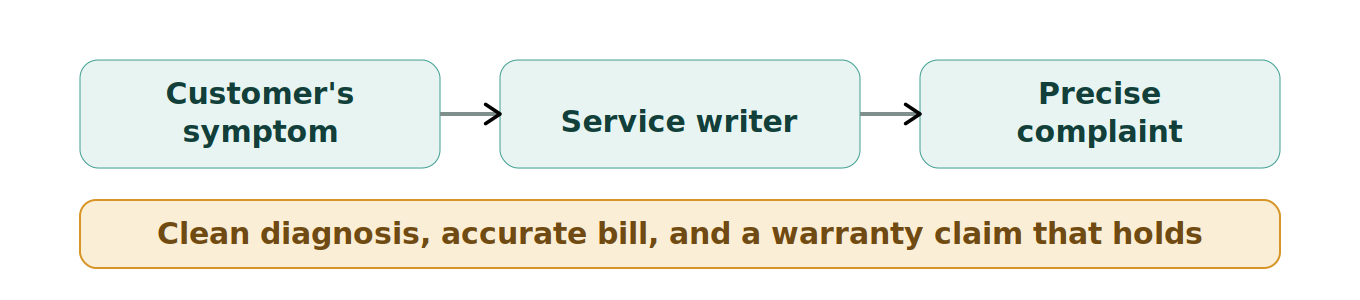
The service writer is the hinge the whole job turns on — the translator between a customer describing a symptom and a technician who needs a precise complaint. A vague write-up sends the tech guessing and the job sideways; a complete one sets up a clean diagnosis, an accurate bill, and a warranty claim that holds.
The write-up decides the job
The complaint has to be captured the way it actually happens, not as an interpretation: what the machine does, when (cold, under load, at a speed, in a function), how often, and what changed. “Runs rough” starts a fishing expedition; “misses under load once it’s warm, started after the last fuel fill” points the tech at something. Get the model and serial, the hours, and the history. The five extra minutes getting a real complaint saves the tech an hour and the customer a comeback.
Manage the customer, sell the work honestly
The writer owns the customer’s experience of the shop: setting expectations on timing and cost up front, updating them before they have to call, and explaining what was found and why it matters. Selling needed work is part of the job — the worn part found during a repair, the maintenance due — sold honestly as what the machine needs, not padded. A customer who trusts the writer’s word approves the work and comes back; one who feels upsold doesn’t.
Protect the warranty and the handoffs
Because the write-up feeds the warranty claim, capturing the complaint and the story correctly is where warranty money is protected or lost. And the writer coordinates the handoffs — parts staged for the job, the schedule realistic, the customer informed — so the job flows instead of stalling.
Where it goes wrong
- Writing a vague complaint that sends the tech guessing.
- Recording an interpretation instead of what the customer actually reported.
- Leaving the customer uninformed until they call angry.
- Padding work instead of selling what the machine genuinely needs.
Related
Estimating, approvals, and communication · Work orders and documentation · Scheduling and loading the shop · Filing warranty claims.