
Scheduling and Loading the Shop
The schedule is two promises at once — to the customer that the machine will be done, and to the shop that the day is workable — and overpromising breaks both. The art is loading the bays productively while keeping capacity for the emergency that will walk in, especially in season.
Load realistically, stage the parts
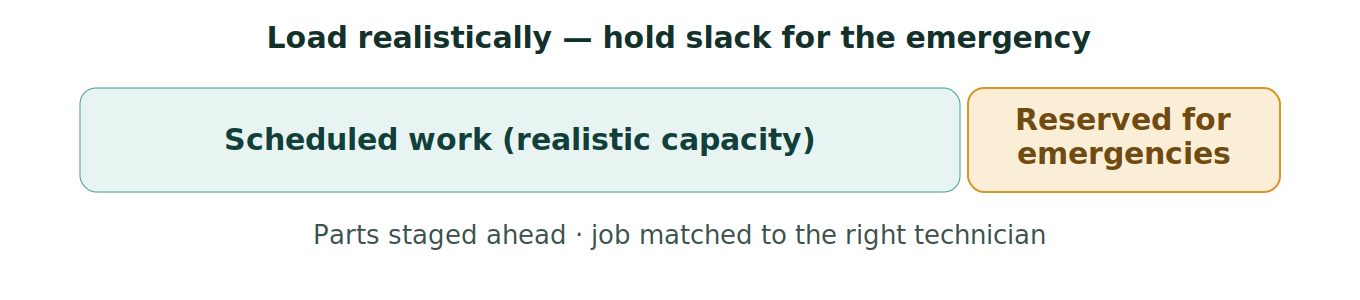
A schedule packed to 100% with no slack collapses the first time a job runs long or a machine comes in down. Load the bays to a realistic level against the techs’ actual capacity, and stage the parts before the job — a scheduled job whose parts aren’t pulled idles the bay while the tech walks to the counter. Matching the job to the right tech’s skill (not the master on oil changes, not a junior on a driveline) keeps throughput up and comebacks down.
Keep capacity for the emergency
In season especially, a machine down at harvest is an emergency that has to jump the queue, and a shop scheduled solid can’t absorb it without blowing every other promise. Deliberately holding some capacity for emergencies — heavier in the busy windows — is what lets the shop deliver the uptime the whole dealership sells. Off-season, the schedule fills with the PM and inspection work that gets customers ready ahead of the rush.
Don’t promise what the shop can’t deliver
A delivery or completion date is a promise the customer plans around, so it’s set against real shop load and real parts availability, not optimism. The writer and dispatcher who commit dates the shop can actually hit build trust; the ones who overpromise to please the customer in the moment create the angry pickup later. Under-promise and hit it rather than over-promise and miss.
Where it goes wrong
- Loading the shop to 100% with no slack for the emergency.
- Not staging parts and idling techs at the counter.
- Mismatching job to technician skill.
- Promising completion dates the shop load can’t support.
Related
Dispatching technicians · The service advisor role · The seasons of ag · Controlling work-in-process.