
What F&I Does
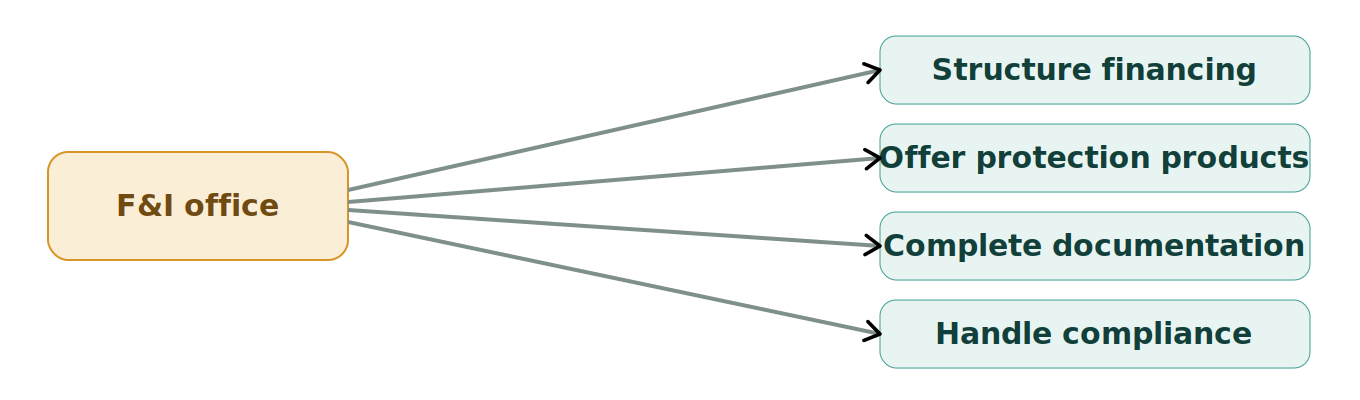
F&I — finance and insurance — turns an agreed deal into a funded, documented, legally clean transaction, and generates real income doing it. It’s where financing gets structured, protection products get offered, the paperwork gets right, and compliance gets handled, and a weak F&I office loses money and creates legal exposure in equal measure.
Two jobs: fund the deal, and add income
F&I arranges and structures the financing (or lease) that lets the customer actually buy, and it offers protection products — extended warranties, insurance, maintenance plans — that both serve the customer and generate high-margin income. On thin whole-goods gross, F&I income is a meaningful contributor to the deal’s profitability. But it only works if the products are sold as genuine value to a customer who needs them, not pushed on someone who doesn’t — the pushy F&I office wins a product and loses the relationship.
Documentation and compliance are the guardrails
F&I owns the paperwork that makes the deal real and legal: the finance or lease contract, titling, liens, disclosures, and registration. Errors here cause funding delays, title problems, and legal exposure, so accuracy is the job. And lending and disclosure rules apply — what’s disclosed, how products are presented, fair treatment of customers — which makes compliance not optional but the frame the whole office operates in. Get the documentation and compliance right and the deal funds clean; get them wrong and it stalls or creates liability.
The handoff from sales
F&I depends on a clean deal from sales — the correct machine and configuration, an accurate trade and payoff, the right numbers. A sloppy sale hands F&I a mess to untangle and delays funding, which is why the sales-to-F&I handoff matters as much as any in the building.
Where it goes wrong
- Pushing protection products on customers who don’t need them.
- Sloppy documentation that delays funding or creates title problems.
- Treating compliance as optional instead of the operating frame.
- Receiving a sloppy deal from sales and passing the delay to the customer.
Related
Financing and lease basics (sales) · Structuring deals · Documentation, titling, and liens · Lending and disclosure compliance.
(General information, not legal or financial advice; follow your dealership’s policies and applicable regulations.)