
Financing and Lease Basics
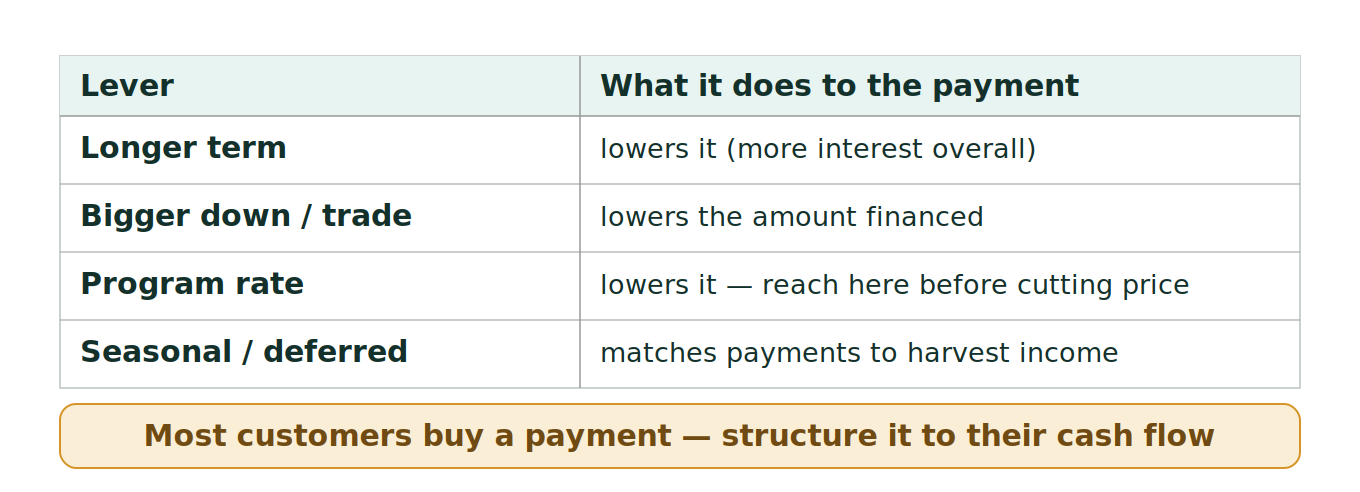
Most customers are buying a payment, not a price, so financing is a selling tool, not paperwork you hand off. The salesperson who can structure a deal to fit the customer’s cash flow closes deals that a lower price wouldn’t.
Sell the payment, structured to the money cycle
A farmer’s income is lumpy and harvest-driven, so the structure often matters more than the rate. Deferred and seasonal payments (“nothing till after harvest”) match money out to money in — not a discount, a payment that fits reality. Terms, down payment, and the trade all move the payment; reach for the manufacturer’s subsidized program (cheap money) before cutting price out of your own gross.
Finance vs lease
A retail installment purchase builds ownership and equity and suits a customer who keeps machines long. A lease lowers the payment, fits a shorter trade cycle and customers who want to stay current, and has tax and ownership implications that are the customer’s advisor’s call, not yours. Match the tool to how the customer actually uses and trades equipment.
The “why did my payment change” conversation
When a rate, term, or program shifts the payment, explain what moved and why — don’t let the customer discover it at signing. And don’t answer questions that aren’t yours: rate buy-downs, program eligibility, and credit decisions run through F&I and the lender. Commit the customer only to what you’ve confirmed.
Where it goes wrong
- Selling price when the customer is buying a payment.
- Cutting your own gross instead of reaching for the program.
- Ignoring the harvest-driven cash cycle in the structure.
- Committing to a rate, term, or approval that isn’t yours to promise.
Related
Understanding the farmer’s business · Building quotes · Trade-in appraisal · F&I (the whole section).
(General information for selling, not tax or financial advice; customers should consult their own advisors.)