
Building Quotes and Proposals
A quote is a commitment and a closing tool, not a number to be shopped. A bare price reduces the whole decision to “is this the lowest number” — the one competition you can’t reliably win — and strips out the value the sales process built.
Complete and accurate
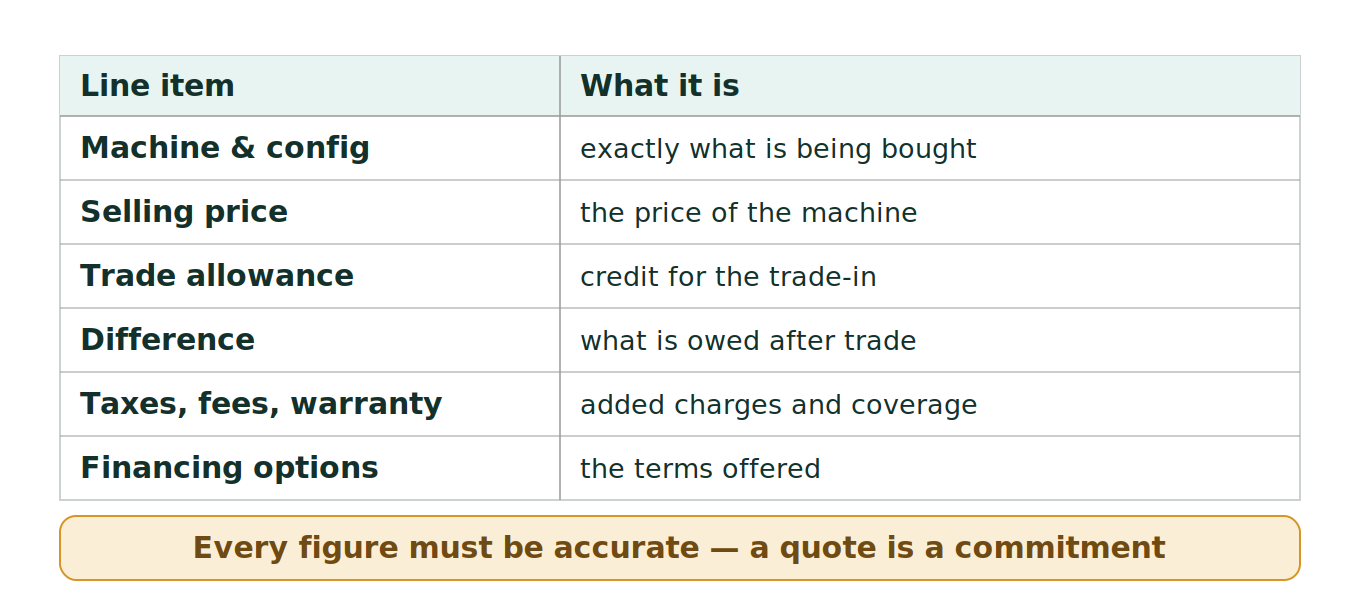
The exact machine and configuration; selling price, trade allowance, and the difference (what the customer actually cares about and where the margin lives); taxes and fees stated, not buried; warranty; and financing/lease options with terms. Every figure has to be right — an error costs gross if honored and trust if corrected, and a customer who catches one error wonders what else is wrong. A quote is a commitment; treat it like one.
Present it, and make it apples-to-apples
Emailing a price surrenders the framing; presenting it controls it — walk the customer through the value, put the price in the context of their cost per acre and their trade. And help them compare like for like: a customer weighing your fully-configured, fairly-priced quote against a competitor’s stripped-down or optimistically-traded one often thinks you’re high when you’re not. You’re not trashing the competitor — you’re making sure they decide on a true comparison, which is usually where an honest, complete quote wins.
Protect margin, and follow up
Don’t give away freight, setup, and first service to fix a number — that’s real gross and the service work absorption runs on. And a quote sent and never followed up is a deal abandoned; every quote leaves with a next step.
Where it goes wrong
- Sending a bare price instead of a value-framed proposal.
- Quoting from stale pricing, wrong programs, or an un-appraised trade.
- Letting the customer compare your complete quote to a stripped one.
- Giving away service and freight, or sending a quote and never following up.
Related
Financing · Trade-in appraisal · Objections and negotiating · Ethics.