
Protecting Gross Margin
Whole-goods gross is thin, and thin things are easy to give away — so price is the most dangerous lever, not the first one to reach for. A small discount is a large share of the gross, and a habit of discounting is a habit of destroying the margin the dealership survives on.
Where the gross goes
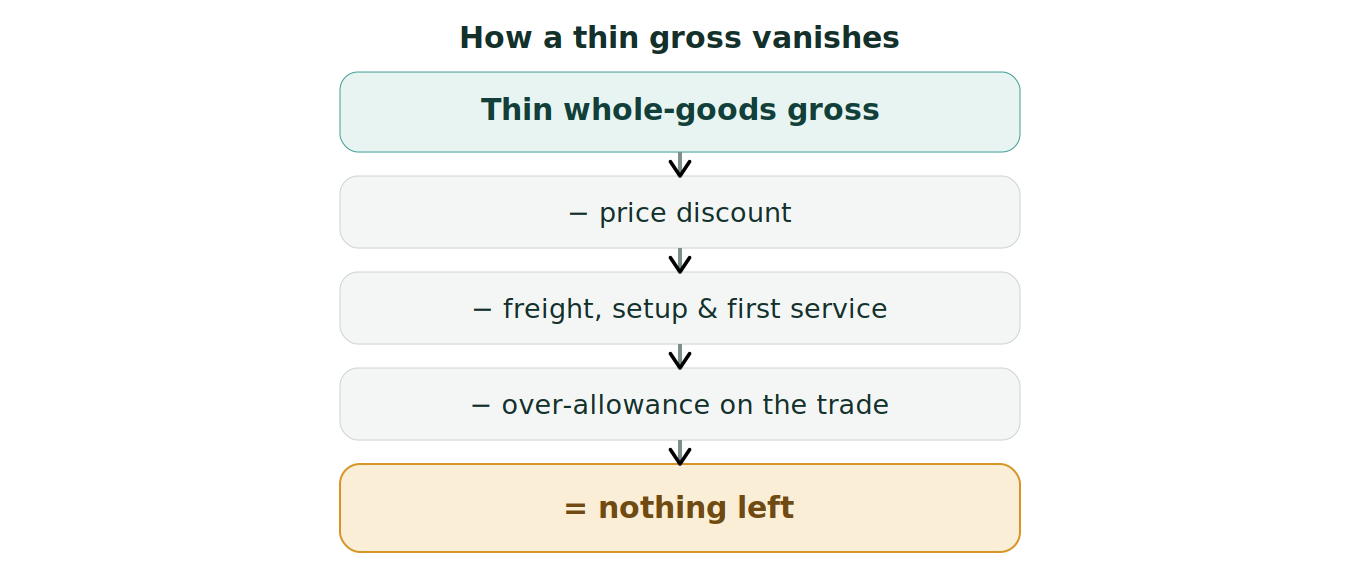
It bleeds out through small concessions that each feel minor: the reflexive discount (a few thousand off a deal that had a few thousand of gross), the throw-ins (freight, setup, and especially first service — high-margin work that feeds absorption, handed over free), and the over-allowance (a generous trade not recovered in price). Any one feels harmless; two or three on one deal and the machine sold at a loss and generated free work for the whole dealership.
Hold value, break the spiral
Compete on value, not price — establish what the machine does for the operation so price resistance becomes a value conversation, and reach for the manufacturer’s program to bridge a gap before cutting your own gross. Competing on price teaches customers price is the game, which brings more price-shoppers and pressures margins further — a spiral to the bottom where a record sales year with blown margins still loses money. The structures that hold the line: a known gross floor, manager involvement below a threshold, managing the difference on a trade, and pay plans that reward gross.
Where it goes wrong
- Reaching for a discount as the first response to any resistance.
- Giving away freight, setup, and first service.
- Over-allowing on a trade without recovering it in price.
- Chasing volume with discounts and mistaking units for profit.
Related
How a dealership makes money · Objections and negotiating · Trade-in appraisal · Pay plans and incentives.