
Wholesale, Auctions, and Remarketing
Not every machine that comes through the door should be retailed off your lot. The question for every trade isn’t “how do I retail this,” it’s “where does this unit belong” — and forcing a unit that doesn’t fit your market onto the lot creates an aging problem, not retail gross.
The channels
Retail (your lot) is the highest gross, for units that fit your market and will sell fresh. Wholesale (dealer-to-dealer) moves a unit to a dealer whose market does fit it — a 4WD articulated tractor that won’t move in dairy country sells fast in big-acre country; you trade a little margin for a fast, certain move and no aging risk. Auction clears units that don’t fit, sets a real market value, and gets distressed inventory off the books, giving up control of the final number for speed and certainty.
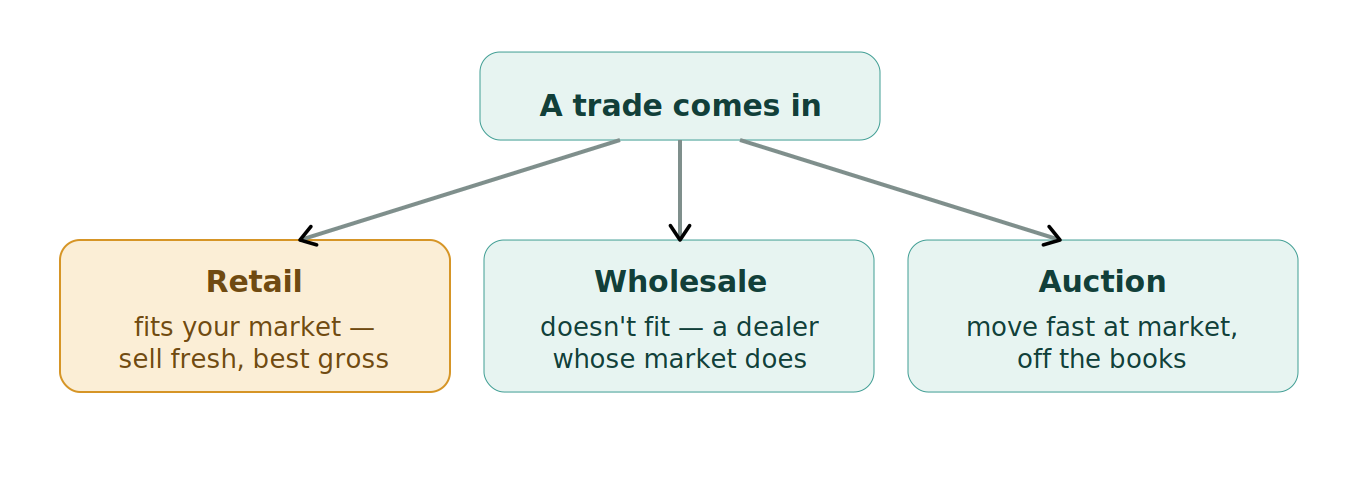
Decide the exit before you take it in
Knowing what your customers buy versus don’t lets you take a trade in at a number that works because you’ll wholesale it, rather than taking it as if you’ll retail it and discovering it won’t move. Remarketing is acting on an aging unit while there’s still gross to protect — widening the buyer pool through online, wholesale, or auction — not letting it sit and bleed. And auction results are where you read real-time used values, which sharpens both appraisal and pricing.
Where it goes wrong
- Trying to retail every trade, including units that don’t fit.
- Taking a unit in as retail, then finding it won’t move on your lot.
- Letting aging units sit instead of remarketing while there’s gross to protect.
- Ignoring auction data and mispricing used equipment.
Related
Used equipment: aging and turn · Trade-in appraisal · Whole-goods inventory · Multi-location inventory sharing.