
Used Equipment: Aging and Turn
Used is where a dealership’s profit is often won or lost, because every used unit is a perishable on a floor-plan clock — its value and gross erode the longer it sits. It isn’t a store of value waiting for a buyer; it’s something you move while it’s fresh.
The aging clock runs the department
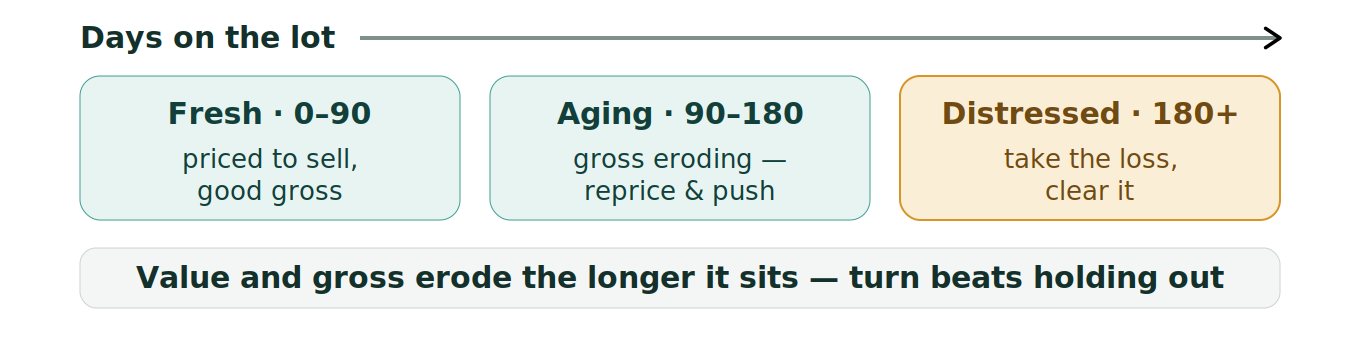
Fresh (roughly the first 90 days) is when a unit sells at its intended gross. Aging (around 90–180) is gross eroding to floor plan and market drift — reprice and push. Distressed (180+) is a problem that sells only at a loss, and the discipline is to take the loss and clear it rather than let it keep bleeding. Turn beats margin-per-unit: a fair gross now beats a bigger number that ages into a write-down.
Recondition promptly or wholesale
Recondition to retail when the machine fits your market and the recon cost is justified by the retail gross — but promptly, because a unit waiting in the shop ages on the lot clock the whole time. Wholesale what doesn’t fit your market or would need more recon than it’s worth; forcing a unit that doesn’t fit your customers onto the lot just creates an aging problem. And don’t fall in love with a nice machine — the market pays what it pays today, not what it’s “worth.”
Where it goes wrong
- Treating a used unit as a store of value instead of a perishable.
- Holding out for full price until a fresh unit becomes a distressed write-down.
- Letting reconditioning drag while the unit ages.
- Retailing a trade that doesn’t fit the market.
Related
Trade-in appraisal · Whole-goods inventory · Wholesale, auctions, and remarketing · Financial statements.