
Whole-Goods Inventory
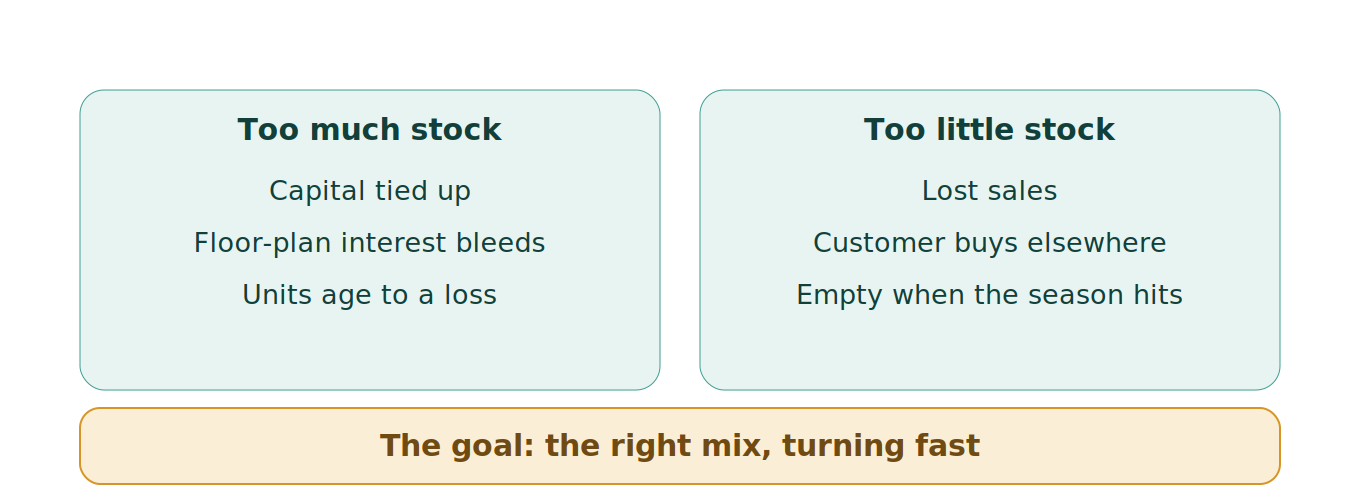
Every machine on the lot is borrowed money on a clock. Floor plan charges interest every day a unit sits and pulls curtailments as it ages, so a unit’s cost climbs the longer it’s there — a full lot isn’t strength, the right units turning fast is.
Floor plan is the clock
A unit that carries decent gross the day it arrives can be at break-even or a loss a year later purely from carrying cost, before anyone negotiates. That’s why “we need to move that unit” is a clock, not a mood, and why the used and whole-goods managers obsess over aging.
Stock the mix, order ahead against allocation
Stock what your market actually buys — the configurations and sizes your customers want — keeping fast movers available without piling up slow, niche units that age. Ordering isn’t just reacting to sales: on popular machines the OEM allocates, so build the order bank ahead of the season to have the hot machine when customers are ready and to earn more allocation by covering your territory. Stock the movers; special-order the specialties to avoid carrying risk on a niche unit.
Where it goes wrong
- Equating a full lot with a strong dealership.
- Ignoring floor-plan carrying cost and letting units age.
- Stocking niche configurations that sit while missing the movers.
- Failing to order ahead and getting caught empty when the season hits.
Related
How dealers and manufacturers work together · Used equipment: aging and turn · Forecasting and the order bank · Financial statements.