
Matching Tillage
Tillage is a system choice, not a category — conventional, reduced, no-till, strip-till reflect a customer’s soil, region, and conviction. Sell a no-till farmer a heavy primary tool and you’ve shown you weren’t listening.
Primary, secondary, and where they sit
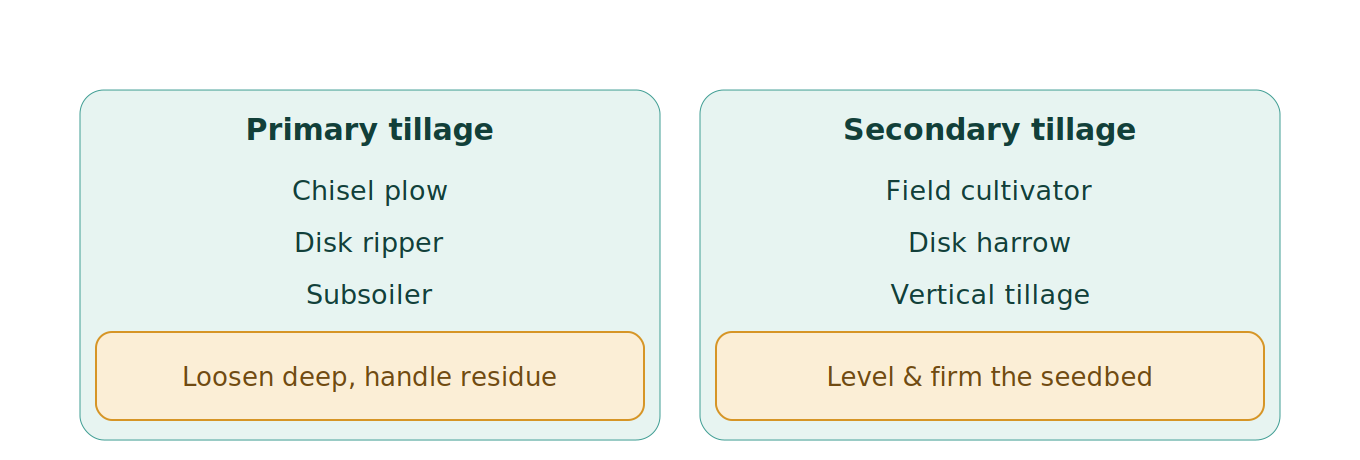
Primary (chisel plow, disk ripper, subsoiler) works deep to fracture compaction and handle residue; secondary (field cultivator, disk harrow, vertical tillage, finisher) prepares the seedbed. The customer’s system tells you which: conventional runs both, reduced-till wants vertical tillage or a finisher, no-till tills almost nothing and may only want a strip-till bar.
The specs, and the width-to-horsepower trap
Working width and the horsepower to pull it in their soil — the classic tillage mismatch is a tool wider or heavier than the tractor can pull, and now they’re spinning and frustrated. Match working depth and residue handling to their goals and crop. This is where the wear-parts business lives too.
Tillage is a parts annuity
Ground-engaging wear parts — points, shovels, sweeps, disk blades, shanks — wear out and get replaced every season, making tillage one of the most reliable ongoing parts relationships in the dealership. The sale opens years of wear-part and service business.
Where it goes wrong
- Selling a tool that fights the customer’s tillage system.
- Mismatching tool width and weight to the tractor’s pulling power.
- Overlooking residue handling and the next operation.
- Missing the wear-part relationship the sale opens.
Related
Tractors · Parts department · Consultative selling · Planters.