
Matching a Tractor to the Job
The customer’s implements specify the tractor better than their horsepower guess does. The two ways to get it wrong both cost you: too much machine and you’ve gouged a customer who’ll resent it, too little and it won’t run their implements and you own the problem.
Let the implements pick it
- PTO horsepower, not engine hp, turns their implements — quote engine hp when a baler or mower needs a PTO-hp match and you’ve overstated what’s available.
- Remotes (SCVs): a planter or folding implement needs a specific number. Two remotes on a machine whose planter needs three is a deal-souring miss.
- Hitch category and lift must carry their heaviest mounted tool — and lift capacity is often spec’d at a point behind the hitch, so compare it measured the same way.
- Transmission to the task: loader-and-chore work wants easy directional changes; heavy tillage wants efficiency under load. The wrong one makes a capable tractor miserable.
- Loader and ballast confirmed to fit and run safely.
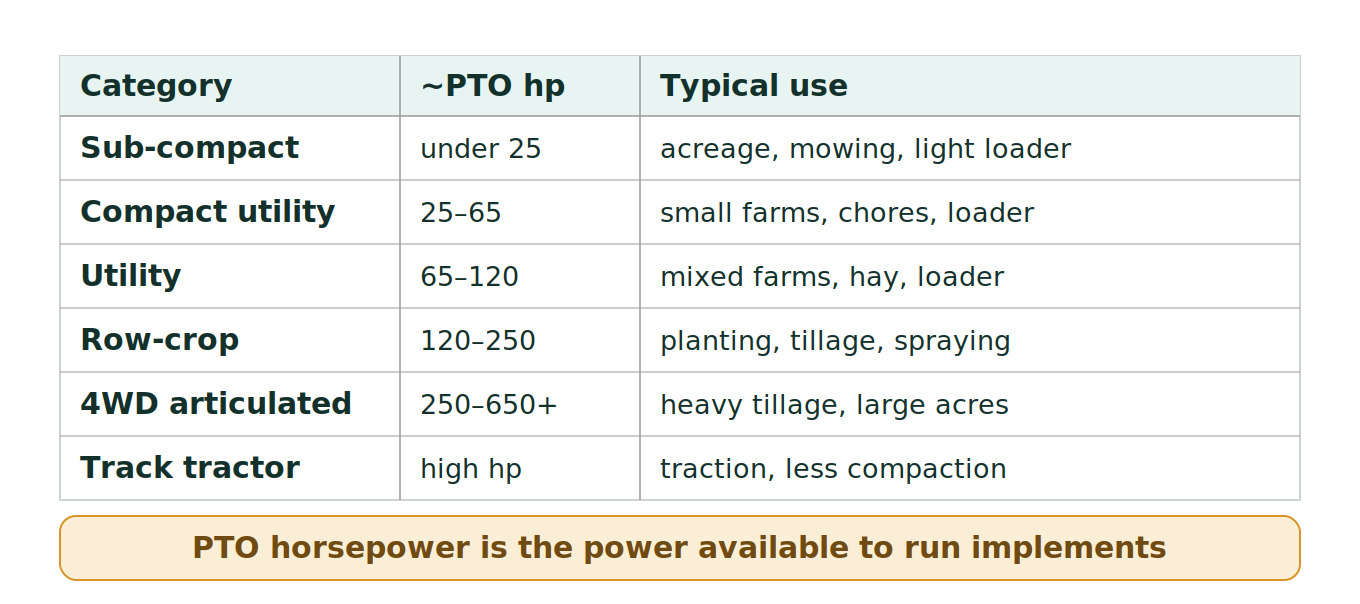
Too much and too little both fail
A 250-hp row-crop machine on a cattleman doing chores wastes money and is clumsy; an under-powered or too-light tractor spins instead of pulling. The right answer is usually not the biggest one on the lot, and selling it that way builds trust. Match drive type to the ground too — tracks earn their cost on heavy tillage and compaction-prone ground, not on an operation that doesn’t need the flotation.
Where it goes wrong
- Selling on engine hp and ignoring remotes, hitch, and transmission.
- Too much tractor for a small operation, or too little to pull their implements.
- Forgetting to confirm loader fit and ballast.
- Selling tracks to someone who doesn’t need flotation.
Related
How to read a spec sheet · Consultative selling · Planters and tillage · Trade-in appraisal.