
Matching a Combine
The highest-stakes machine on the lot — its whole value is realized in a two-week window, so undersizing it or getting the header wrong isn’t a compromise, it’s a customer with standing grain and your name on the sale.
Size to the acres and the window
Class (capacity) is matched to the acres, crops, yields, and realistic good harvest days — not to the biggest machine you can sell. Too small and they can’t finish in the window (the worst outcome, because timing drives grain quality and loss); too big and they’ve overpaid and it’s clumsy on smaller fields.
The header is where deals go wrong
A combine runs several headers a season — corn head, draper or platform for wheat and beans, flex head for soybeans, pickup for windrows. Get the header type, size, or compatibility wrong and the customer has a great combine that can’t harvest one of their crops. The header lineup is part of the sale, not an afterthought.
Used combines: hours and condition lead
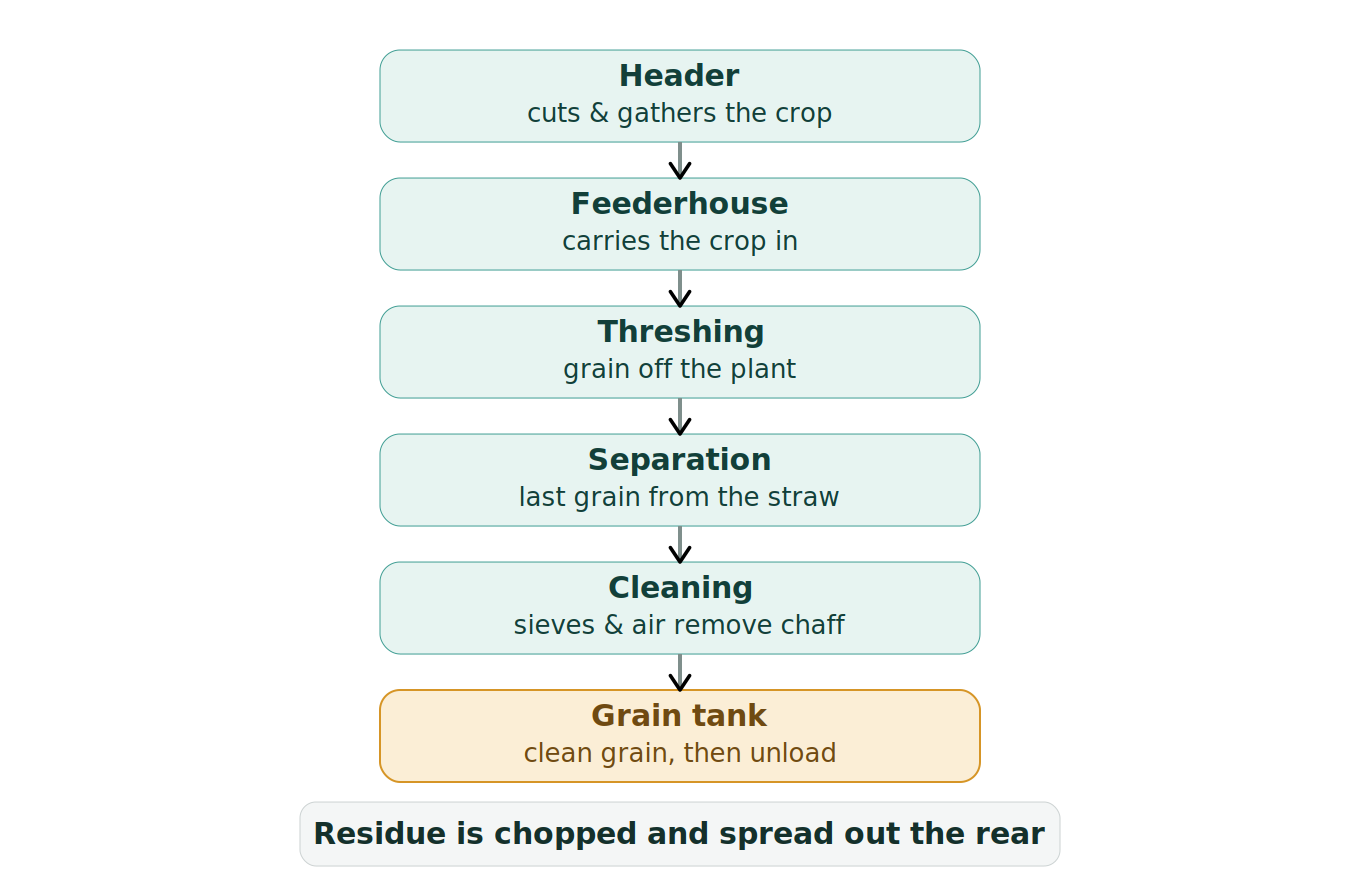
A huge share of combine business is used, and separator hours and condition swing value more than almost anything — these machines take a beating, and a tired one is a harvest breakdown waiting to happen. Threshing type (rotary vs conventional) affects capacity, grain quality, and residue, and customers have strong preferences. Unload rate and grain-tank size matter for logistics on big acres.
Where it goes wrong
- Undersizing for the acres and the window.
- Getting header type, size, or compatibility wrong.
- Ignoring separator hours and condition on a used machine.
- Selling on price when harvest-window reliability is what they’re buying.
Related
Trade-in appraisal · The seasons of ag · Selling precision ag · Harvest readiness.