
What the Job Actually Is Day to Day
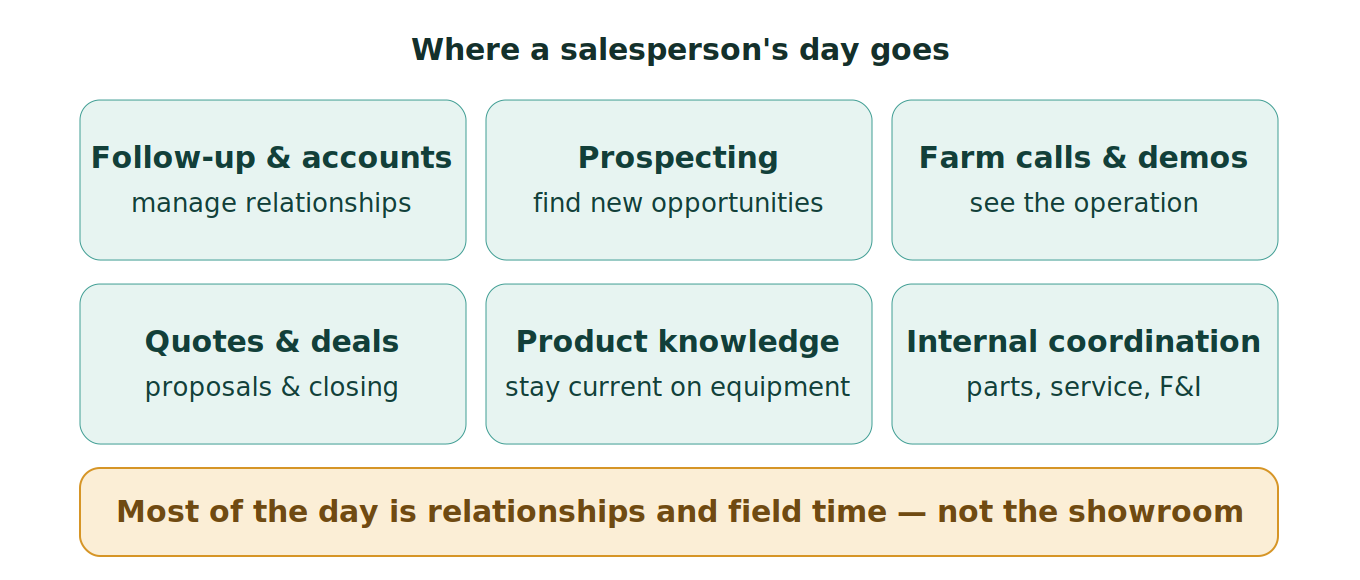
Selling equipment is field time, follow-up, and relationships built over months and years — the showroom walk-in ready to buy is the rare event, not the business. The salespeople who understand that build a book; the ones waiting for ups fish in a puddle.
Where the hours go
Follow-up and account management (the highest-value work, and the most neglected), prospecting to keep the pipeline three months out, farm calls and demos on the operation, quotes and deals, staying current on product, and coordinating with parts, service, and F&I to keep deals and deliveries clean. The paperwork and the showroom are a smaller slice than beginners expect.
The service drive is a goldmine
Every customer whose machine is in the shop is already on the property, already thinking about their equipment, and often within a season of a purchase. Working the service drive — learning plans, noticing the machine that’s getting tired — is prospecting in the warmest water there is, and most people walk right past it.
You’re the customer’s advocate inside the building
The relationship is the product, not the transaction. When a customer’s combine is down at harvest, a salesperson who makes sure service knows it’s their customer and it matters earns the next three machines without the customer shopping them. Taking care of people inside the dealership is the long game that pays.
Where it goes wrong
- Living in the showroom waiting for ups.
- Neglecting follow-up to chase strangers.
- Walking past the service drive full of live prospects.
- Treating the sale as the end instead of the start.
Related
Using a CRM · Prospecting and finding leads · Consultative selling · The departments and the handoffs.