
Financial Statements and Schedules
The financial statements are the output the whole office exists to produce — the income statement, balance sheet, and the supporting schedules that show where the numbers come from. Reading them is how management runs the business, and producing them accurately is what makes that possible.
The statements and what they show
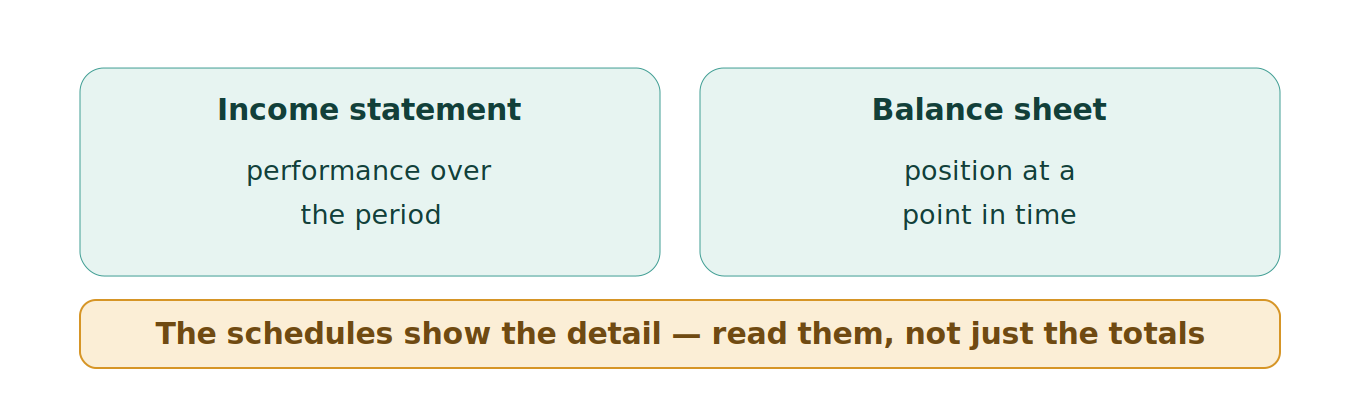
The income statement shows revenue, cost of goods, gross profit by department, operating expenses, and net — the performance of the period, with the departmental detail revealing thin whole-goods gross against healthy parts and service margins and whether the shop is carrying the overhead. The balance sheet shows what the dealership owns and owes at a point in time — inventory (the largest asset) and the floor-plan liability against it, receivables, cash, and equity. Together they answer whether the dealership made money and whether it’s financially sound, which are different questions a good office keeps distinct.
Schedules show the detail behind the numbers
Behind the summary statements are schedules — the detailed breakdowns that support and prove the headline numbers: the inventory schedule (what units and parts make up the inventory asset and their aging), the receivables schedule (the AR aging), the floor-plan schedule, warranty and OEM receivables, and others. The schedules are where a number gets verified and where problems hide in plain sight — an inventory schedule heavy with aged units, a receivables schedule thick with 90-day balances, tell a story the summary total doesn’t. Reading the schedules, not just the statement totals, is how the real health shows.
Produce them accurately, read them rightly
The office produces these accurately (which depends on everything upstream — accurate entry, a clean close, reconciled accounts), and management reads them to run the business. The office’s job is that the statements and schedules are right and tie out; management’s job is reading them well — absorption, gross-to-net, inventory turns and aging, receivables health. A dealership where the statements are accurate and actually read runs on reality; one where they’re sloppy or ignored runs on guesses.
Where it goes wrong
- Reading statement totals without the schedules behind them.
- Producing statements that don’t tie because the close or entry was sloppy.
- Confusing “made money” (income statement) with “financially sound” (balance sheet).
- Ignoring the aging and detail the schedules reveal.
Related
Dealership financial statements (foundations) · Month-end close and reconciliations · Dealership accounting basics · Reading the scoreboard.