
The Controller / Office Manager Role
The controller or office manager runs the financial and administrative engine of the dealership — the person who owns accuracy, controls, reporting, and the office team, and whose work lets management run the business on numbers they can trust. It’s a role of quiet, essential responsibility that the whole operation depends on and rarely sees.
Owning the numbers and the controls
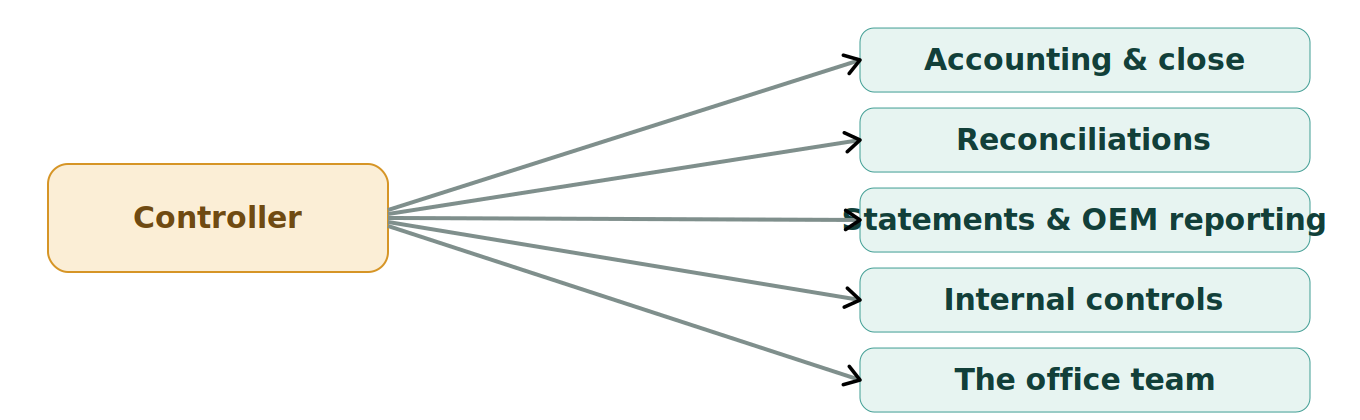
The controller is responsible for the accuracy and integrity of the dealership’s financials: the accounting, the month-end close, the reconciliations, the financial statements, the OEM and floor-plan reporting, and the internal controls that protect the money. When management reads a report to make a decision, they’re trusting the controller’s work that the number is real. That makes the role the guardian of financial truth in the building — the person ensuring the data everyone acts on is accurate, the controls are followed, and the reporting is right and timely.
Leading the office and enforcing discipline
The controller also leads the office team — cashiering, AR, AP, payroll, deal processing, data entry — and sets the standard of accuracy and control the whole office works to. That means training and holding the team to accurate entry and clean process, enforcing the internal controls consistently (including the uncomfortable separation-of-duties discipline), and being the one who investigates a discrepancy rather than letting it slide. The office’s reliability is the controller’s culture, and a controller who lets accuracy and controls slip lets the whole financial picture drift.
The bridge to management and outside parties
The controller bridges the office to management (translating the numbers into what they mean for the business), to the OEM (the required reporting and financial relationship), to the floor-plan lender (reconciliations and audits), and to outside accountants and auditors. Being the reliable, accurate, honest steward of the dealership’s finances — the person whose numbers hold up under any scrutiny — is the essence of the role. It’s not glamorous, and the business cannot run well without it.
Where it goes wrong
- Letting accuracy or controls slip and drifting the financial picture.
- Not enforcing separation of duties and other controls consistently.
- Producing reports management can’t fully trust.
- Failing to investigate discrepancies or stay audit-ready.
Related
Internal controls and fraud prevention · Month-end close and reconciliations · Financial statements and schedules · Management and leadership.