
Accurate DMS Data Entry
The office lives in the DMS, and the accuracy of what gets entered there is what makes every report, count, and financial statement trustworthy or fiction. Data entry feels like the lowest-stakes task in the building and is actually where the reliability of the whole system is made or broken, one keystroke at a time.
Garbage in, garbage out — with real dollars
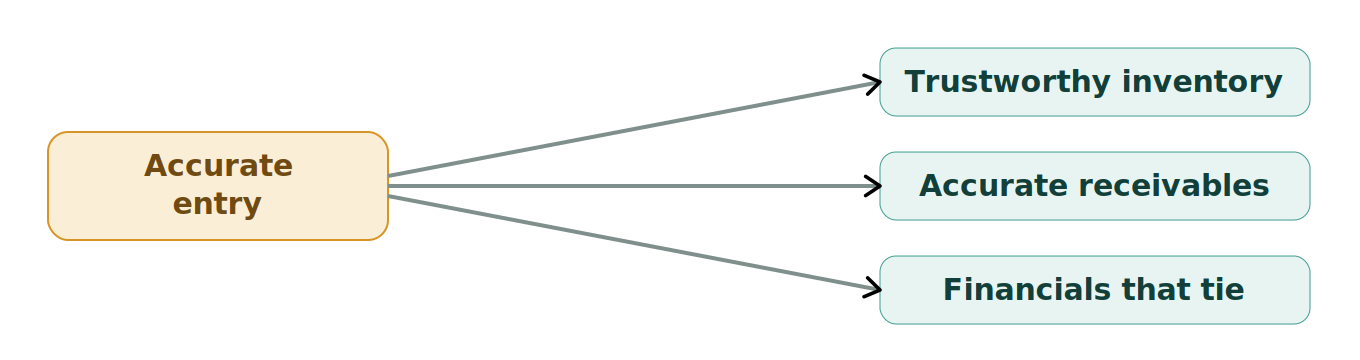
The DMS is the single system of record, and the reports management runs the business on — absorption, margins, receivables, inventory — are only as accurate as the transactions entered. A wrong part number, a misapplied payment, a miskeyed cost, a customer record with bad data each drift a number that someone downstream trusts and acts on. The five-second shortcut at the keyboard becomes a phantom stockout, a wrong balance, a report that lies, or a financial statement that doesn’t tie. Accuracy at entry is what makes the data worth trusting.
It’s connected, so errors travel
Because the DMS is one integrated system, an error entered in one place surfaces everywhere it touches — a wrong cost affects margin and inventory value, a misapplied payment corrupts receivables and the customer’s balance, a mis-keyed deal ripples into the financials. The office can’t treat its entry as isolated; it’s feeding the same connected system parts, service, and sales feed, and its errors compound with theirs. This is why the office is often the last line of accuracy — verifying and catching entry errors before they settle into the books.
Enter it right, and verify
The discipline is straightforward and unglamorous: enter transactions accurately and completely the first time, use the correct codes and accounts, don’t skip or override system steps to save time, and verify entries where it matters (the reconciliations and reviews exist to catch drift). Treating accurate entry as a core professional responsibility, not menial typing, is the mindset that keeps the whole system trustworthy — because everyone above depends on numbers only as good as what was keyed in.
Where it goes wrong
- Careless entry that drifts counts, balances, and reports.
- Treating data entry as menial instead of the foundation it is.
- Skipping or overriding system steps to save time.
- Not verifying entries and letting errors settle into the books.
Related
The DMS · Deal paperwork flow and filing · Dealership accounting basics · Internal controls.