
From Peer to Leader
The hardest promotion in a dealership is the first one — the day you go from being the best salesperson or tech to running the people you worked beside. The skills that got you promoted aren’t the skills the new job needs, and the relationships you had have to change without becoming cold. Most new managers stumble here, and it’s learnable.
Your job changed completely
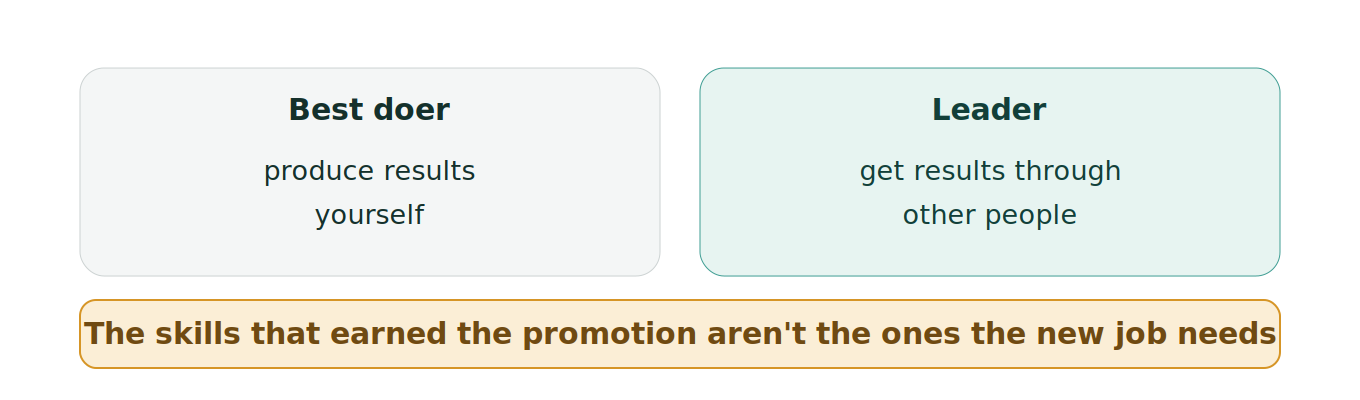
You were promoted for being great at the work; the new job is getting results through other people, which is a different job, not more of the same. The trap is staying in the comfort zone — doing the selling or wrenching yourself because you’re good at it and it feels productive — while the actual manager’s work (developing people, removing obstacles, managing the numbers, setting direction) goes undone. The team doesn’t need another top producer; it needs a leader who makes everyone more productive. Letting go of being the best doer to become the multiplier is the whole transition.
The relationships have to shift
Yesterday’s peers are today’s team, and the friendships can’t stay exactly as they were — you now make decisions about their pay, their performance, and their work. The move isn’t to go cold or lord the title; it’s to be fair, consistent, and clear with everyone, and to accept that you can be respected and liked without being one of the crew anymore. Playing favorites with old friends, or overcorrecting into harshness to prove you’re in charge, both break trust. Consistency and fairness across the whole team is what earns the new kind of respect.
Lead before you’re comfortable
New managers often wait to feel ready and lead timidly in the meantime — but the team needs direction from day one. Setting clear expectations, making the calls that are yours to make, holding people accountable kindly but firmly, and owning mistakes builds the credibility that makes leading feel natural. You learn the job by doing it, with humility and a willingness to ask for help, not by waiting until you’ve got it figured out.
Where it goes wrong
- Staying a top doer instead of becoming a multiplier.
- Playing favorites with former peers, or overcorrecting into harshness.
- Leading timidly while waiting to feel ready.
- Avoiding the accountability conversations the role requires.
Related
Delegation and accountability · Coaching and one-on-ones · Culture, vision, and employer brand · Communication skills.