
Multi-Location Inventory Sharing
In a dealer group, the network’s combined inventory is a competitive advantage — a part out at one store is often on a shelf an hour away — and using it well means serving customers faster and cheaper and keeping the whole group’s capital working. The waste is a store operating as an island, expediting parts that already exist in the network.
The network is combined inventory
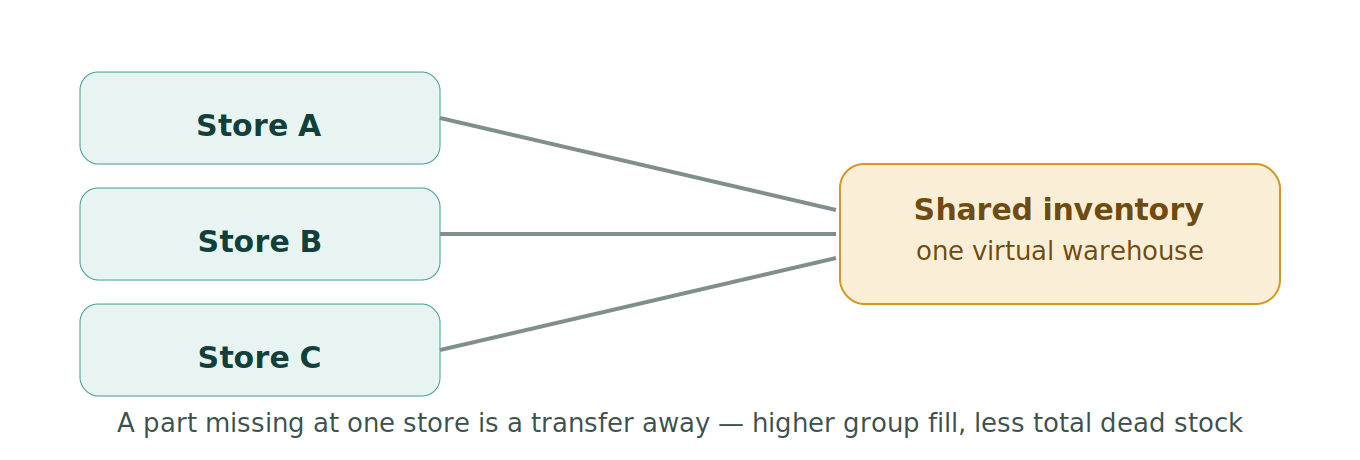
A multi-store group can see and move parts across locations, which effectively gives each store access to far more inventory than it stocks. A part out at your counter may be on the shelf at a sister store, reachable on a transfer run faster and far cheaper than emergency freight from the manufacturer. Checking the network before expediting — network first, expedite last — is the habit that turns the group’s combined stock into real savings and faster service.
Balance stock across the group
Sharing also lets the group put inventory where it sells: a slow-mover at one store may be a fast-mover at another, so transferring it turns dead stock into a sale and frees capital, instead of each store independently over- or under-stocking. Managed at the group level, the network reduces total inventory needed while raising fill — the combined stock does the work that duplicated stock at every store would.
Keep the counts honest across stores
The whole thing depends on accurate counts at every location and tracked transfers — an untracked transfer or a drifted count at one store breaks the network’s picture for everyone. The same receiving, put-away, and cycle-counting discipline that keeps one store accurate is what makes the shared network trustworthy.
Where it goes wrong
- Operating as an island and expediting parts already in the network.
- Not checking the network before paying premium freight.
- Leaving slow stock at one store while another store’s customers want it.
- Drifted counts or untracked transfers that break the shared picture.
Related
Shipping, receiving, and transfers · Managing obsolescence and surplus · Physical inventory and cycle counting · Inventory health.