
Rental Contracts, Rates, and Terms
The rental contract and the rate structure are where the department makes money or leaks it — the rate has to recover the asset over its rental life, and the contract has to protect the dealership on hours, damage, and responsibility. Loose terms turn a profitable rental into a dispute or a loss.
Rate structure and where it comes from
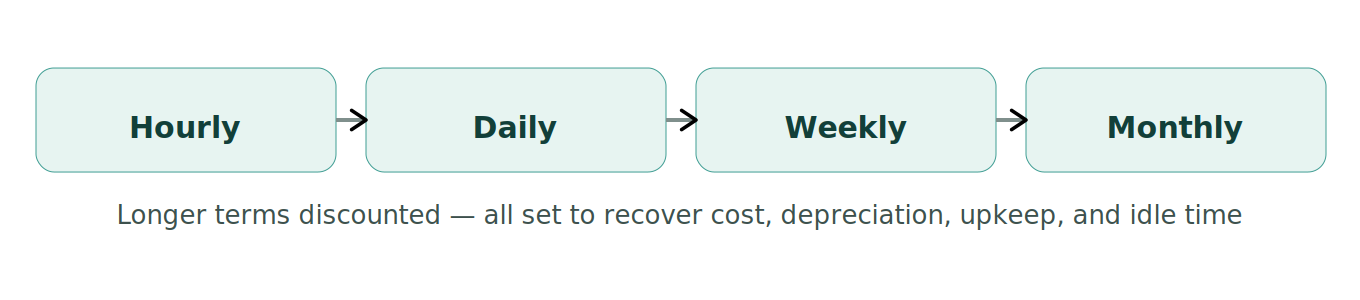
Rentals price by the period — hourly, daily, weekly, monthly — usually with the longer periods discounted per unit of time. The rate isn’t arbitrary: it has to recover the machine’s cost, depreciation, maintenance, insurance, and idle-time cost over the unit’s rental life and still profit, which is why rental rates look high against a purchase payment but reflect the full carrying cost plus the risk. Rate tiers (short-term higher, long-term lower) reflect that a long rental is more like financed use and a one-day rental carries all the turnaround cost.
The contract protects the dealership
A clear contract defines what a loose handshake leaves to dispute: the hours or use included (and the overage rate beyond them — a machine run far harder than expected without an overage term is uncompensated wear), the rental period and late-return terms, who’s responsible for what (fuel, damage, transport, routine vs. abuse), damage and insurance requirements, and the condition at check-out. The contract is what makes the check-in conversation about facts, not opinions, when a machine comes back damaged or over-hours.
Match the term to the need, and set expectations
Reading the customer’s actual need points to the right term — a one-job renter to a daily/weekly, a season-long supplement to a monthly — and setting the hours, responsibilities, and return expectations up front prevents the disputes that come from assumptions. A customer who understood the overage rate, the damage terms, and the return time going in is a clean return; one who didn’t is an argument.
Where it goes wrong
- Setting rates that don’t recover the machine’s full carrying cost and risk.
- Loose contracts that leave hours, damage, and responsibility to dispute.
- No overage term on a machine run harder than expected.
- Failing to set return, damage, and responsibility expectations up front.
Related
Rental fundamentals · Damage, insurance, check-out and check-in · Rental department financials · Fleet management.