
Rental Fundamentals and the Rental Customer
Rental is a different business than selling iron — the dealership owns the asset and monetizes it by the hour, day, or month, and the whole model turns on keeping expensive machines busy. It also serves customers who’d never appear on the sales floor and feeds the sales pipeline, which is why a rental department is worth running well rather than as an afterthought.
Why customers rent instead of buy
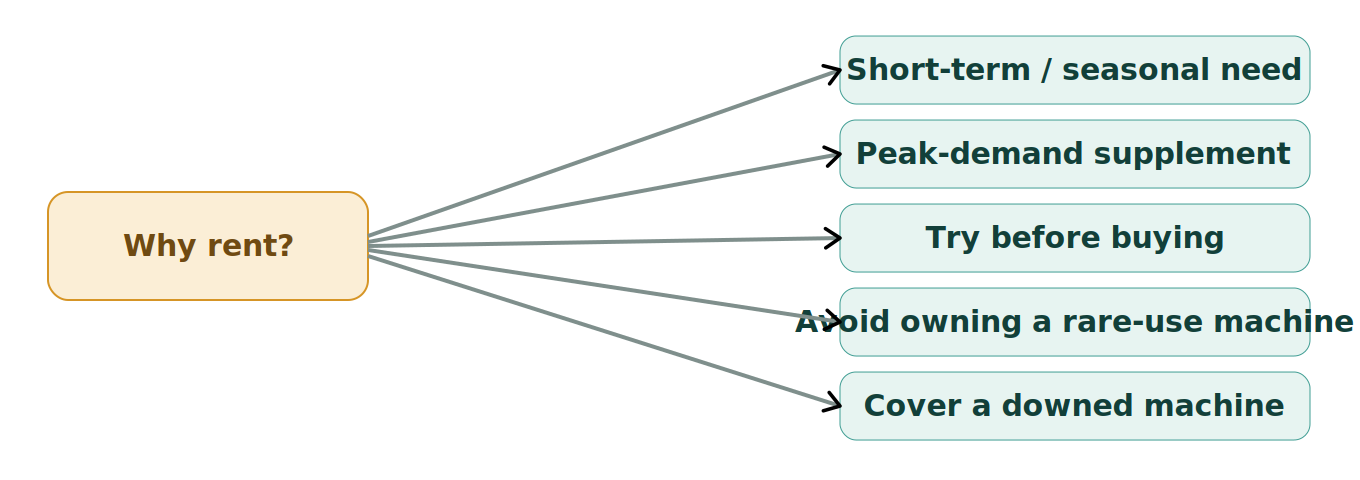
People rent for reasons that have nothing to do with not affording a machine: a short-term or seasonal need (a machine for one job or one season, not a year-round purchase), a peak-demand supplement (extra capacity during planting or harvest without owning it), trying before buying (running a machine on their operation before committing), avoiding ownership of a specialized machine used rarely, and covering a downed machine while theirs is repaired. Reading which reason is driving the rental tells you what they need and often points to a future sale.
Rental as a sales channel
The try-before-buy renter is a warm sales lead who’s literally running the product, and a good rental program converts rentals to purchases (often with rent applied toward the buy). The peak-demand renter may be a future buyer as they grow. Treating rental as a standalone silo misses this — the rental customer is frequently a sales customer in the making, and coordinating rental and sales turns rented hours into sold machines.
The model: own the asset, sell the hours
Because the dealership owns the machine, rental income has to cover the machine’s cost, depreciation, maintenance, insurance, and the cost of it sitting idle between rentals — which is why utilization (keeping the fleet busy) is the number the whole department lives on. A rental unit earning nothing on the yard is a depreciating asset losing money, so the discipline is different from sales: not “sell it once” but “keep it working.”
Where it goes wrong
- Treating rental as a silo instead of a sales channel.
- Missing the try-before-buy renter as a warm lead.
- Ignoring the cost of an idle rental unit depreciating on the yard.
- Not reading why the customer is renting to serve them and spot the sale.
Related
Rental contracts, rates, and terms · Fleet management and utilization · Rent-to-own options · Who is the customer.