
Accounts Receivable and Collections
Receivables are money the dealership earned but hasn’t collected — work done and goods sold on account — and a growing AR is cash the business is owed but can’t use. Managing it is balancing firm, timely collection against the relationships that are the whole business, which in a small community is a real tightrope.
AR is uncollected cash on a clock
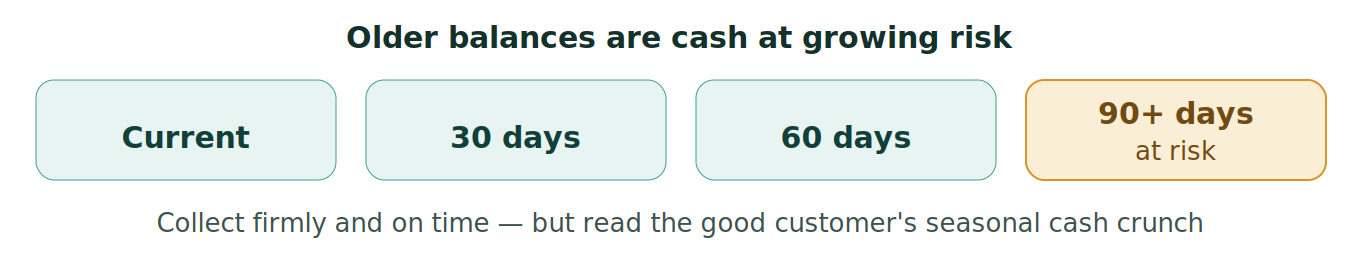
When the dealership sells parts, bills service, or extends terms on account, it’s owed money that sits in accounts receivable until paid. That’s real cash the business has effectively lent, and the longer it goes uncollected the more it strains cash flow and the more it risks becoming uncollectible. The AR aging — how long balances have been outstanding — is the tool: current balances are normal, but aging balances (30, 60, 90+ days) are cash at risk that needs attention before it becomes a write-off. Managing receivables is managing the dealership’s cash.
Collect firmly and on time
The discipline is timely, consistent collection: invoicing promptly and accurately, following up on balances as they age (not waiting until they’re 90 days out), and having a clear, consistent process for reminders and escalation. A dealership that lets receivables drift trains customers to pay slowly and quietly bleeds cash; one that collects consistently and professionally keeps its cash working. Firm doesn’t mean harsh — it means clear terms, prompt invoices, and steady follow-up rather than letting balances slide and then scrambling.
Balance collection against the relationship
This is the tightrope specific to a small-community, relationship-driven business: the customer with an aging balance is also a long-term customer whose loyalty is the business, and the seasonal cash cycle means a good customer may genuinely be cash-poor between harvests. So collection is handled with professionalism and judgment — firm on the process, but reading the situation (a temporary cash crunch on a solid customer is different from a chronic non-payer) and working with good customers on structure where it makes sense, without letting that become an excuse to let AR rot. Protecting the cash and the relationship both is the skill.
Where it goes wrong
- Letting receivables drift and training customers to pay slowly.
- Invoicing late or inaccurately and delaying collection.
- Ignoring the aging until balances become write-offs.
- Handling collection so harshly it damages a good long-term relationship.
Related
Cashiering and cash handling · Dealership accounting basics · Understanding the farmer’s business · Internal controls.