
Coaching and One-on-Ones
The highest-leverage thing a manager does is make each person better, and that happens in coaching and regular one-on-ones — not in the annual review nobody remembers. A manager who only talks to people when something’s wrong has a team that’s guarded and stagnant; one who coaches consistently has a team that grows.
Coach, don’t just correct
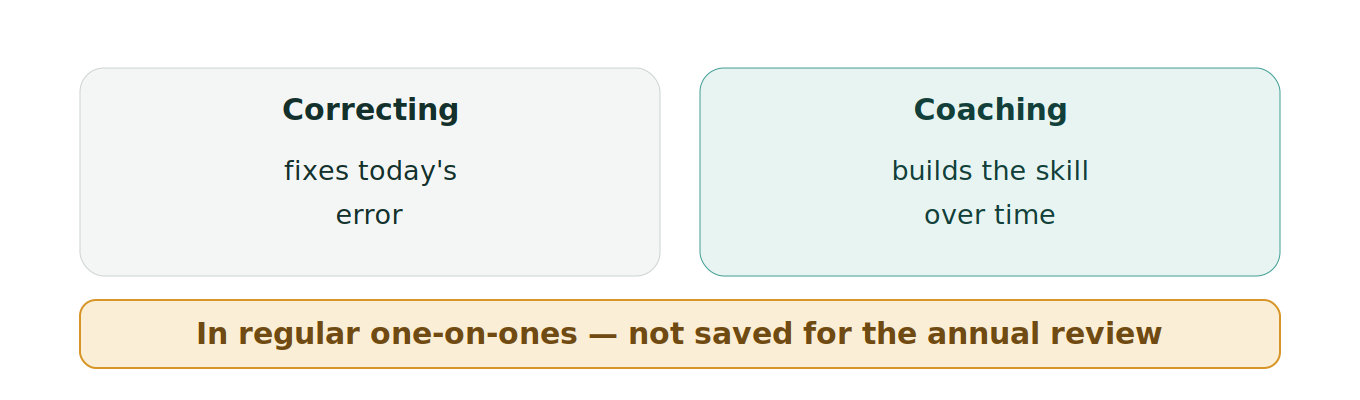
Coaching is developing someone’s ability over time — helping them get better at the work — not just fixing today’s mistake. The difference is orientation: correction addresses the error that happened, coaching builds the skill so it stops happening. A manager coaching a tech doesn’t just point out the missed diagnosis; they work through how the tech approached it and build a better method for next time. Good coaching is specific, timely (close to the work, not months later), and forward-looking — it leaves the person more capable, not just chastened. The best managers are teachers who make their people better than they’d be alone.
Hold regular one-on-ones
The container for coaching is the recurring one-on-one — a regular, protected conversation with each person that isn’t about firefighting. It’s where you check in on their work and their obstacles, coach, give and get feedback, talk development, and simply stay connected to how they’re actually doing. Skipping one-on-ones “because we talk all day anyway” misses that hallway talk is all tasks and no development — the dedicated conversation is where growth and trust get built. Consistency matters more than length: a real thirty minutes every couple of weeks beats an hour once a quarter that keeps getting canceled.
Feedback both ways, and listen
One-on-ones work when they’re a two-way conversation, not a manager’s monologue. Give feedback that’s specific and actionable (praise and correction both), and genuinely ask for theirs — what’s getting in their way, what they need, where the department could be better. People closest to the work see problems the manager can’t, and the one-on-one is where that surfaces if you actually listen. A manager who only talks and never listens trains people to stop bringing things up.
Where it goes wrong
- Correcting mistakes but never coaching the underlying skill.
- Skipping one-on-ones and only talking when something’s wrong.
- Saving feedback for an annual review nobody remembers.
- Making the one-on-one a monologue instead of listening.
Related
Delegation and accountability · Recruiting and retaining technicians · Building a bench · Giving and receiving feedback.