
Hiring and Building a Bench
The best time to hire is before you’re desperate, and the best managers are always quietly building a bench — because the tech shortage and the relationship nature of the business mean you can’t just post a job and fill a hole overnight. Hiring reactively, under pressure, is how bad hires happen.
Hire for fit and trajectory, not just the opening
A dealership runs on people who’ll stay, grow, and represent it well to customers, so hiring is about fit (with the culture, the customers, the team) and trajectory (can they grow into more) as much as today’s skills — especially where skills can be trained but attitude and reliability can’t. The pressure to fill an empty seat fast tempts managers into hiring whoever’s available, which produces the turnover and problems that cost far more than the vacancy did. Hiring for the long term — someone you can develop and keep — beats hiring for the immediate gap.
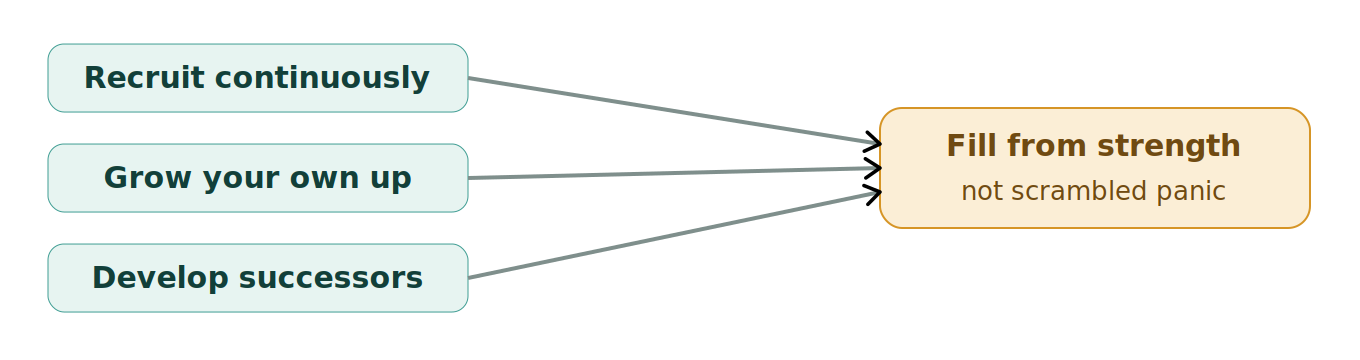
Recruit continuously, not just when desperate
Because good people are scarce and take time to find and develop, the strongest managers recruit all the time — building relationships with prospects, staying visible in the trade schools and the community, and growing their own people up the ladder. The bench is the depth that lets you absorb a departure, a retirement, or a growth opportunity without a crisis. A manager always half-recruiting fills openings from a pool of known, developing candidates; one who only looks when a seat empties hires from whoever happens to be looking that week, under the worst pressure.
Grow your own and develop successors
The most reliable source of good people is the ones you already have — developing an apprentice into a journeyman, a strong tech into a lead, a salesperson into a manager. Growing your own builds capability the market won’t sell you and creates the loyalty that keeps people, and deliberately developing a successor for key roles (including your own) means the department doesn’t break when someone leaves. A manager who’s built a bench and developed successors has a resilient department; one who hoarded knowledge and developed no one leaves a hole when they go.
Where it goes wrong
- Hiring reactively under pressure and making bad hires.
- Hiring for today’s skills while ignoring fit and trajectory.
- Only recruiting when a seat is already empty.
- Developing no successors and leaving the department fragile.
Related
Recruiting, leveling, and retaining technicians · Coaching and one-on-ones · Succession and exit planning · Culture, vision, and employer brand.