
Process Improvement (Lean in the Dealership)
Every dealership is full of small wastes that nobody sees because “that’s how we’ve always done it” — the tech walking to the parts counter ten times a day, the deal that bounces between desks, the double-handled part. Process improvement is the discipline of seeing those wastes and removing them, and it compounds into real money and a better place to work.
See the waste
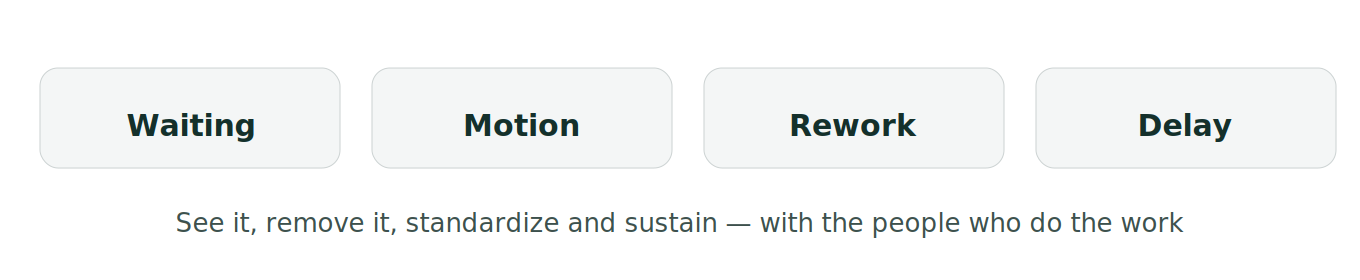
The core idea borrowed from lean is that most inefficiency is waste hidden in everyday processes — waiting (the tech idle for parts or approval), motion (walking, searching, re-handling), rework (the comeback, the corrected error), and delay (the stalled work order, the deal stuck on a desk). These feel normal because they’re constant, which is exactly why they go unaddressed. The first skill is learning to see the waste — to watch a process (a repair order’s path, a part’s journey from receiving to the shelf, a deal’s flow) and notice where time and effort leak. Once you see it, you can remove it.
Improve the flow, involve the people
Fixing waste is usually about improving flow — parts staged so the tech doesn’t walk, the deal’s paperwork path streamlined so it doesn’t stall, receiving organized so parts hit the shelf fast. The most durable improvements come from the people who actually do the work, because they see the friction the manager can’t and they own the fix. Involving the team in spotting and solving process problems does double duty: it produces better solutions and it builds engagement, because people who improve their own work are invested in it. Top-down process edicts get resisted; improvements the team designed get adopted.
Standardize and sustain
An improvement that isn’t standardized drifts back to the old way. Once a better process is found, it gets documented as the standard, everyone trained to it, and it’s sustained — measured and maintained so it sticks. And process improvement is continuous, not a one-time project: small, steady improvements to how the work flows compound over time into a meaningfully more productive, less frustrating operation. The dealership that makes improving its processes a habit pulls steadily ahead of the one that runs on “how we’ve always done it.”
Where it goes wrong
- Accepting everyday waste as normal because it’s always been there.
- Imposing process changes top-down instead of involving the people doing the work.
- Improving something once and letting it drift back.
- Treating process improvement as a project instead of a continuous habit.
Related
Reducing comebacks and improving quality · Dispatching technicians · Receiving and put-away · Leading change and new technology.