
Your Rights and Responsibilities as an Employee
Every person working at a dealership has both rights the law protects and responsibilities they owe the employer, and knowing both keeps you on solid ground. This isn’t legal advice — the specifics vary and change — but the framework helps you recognize when something’s off and understand what’s expected of you.
Rights the law protects
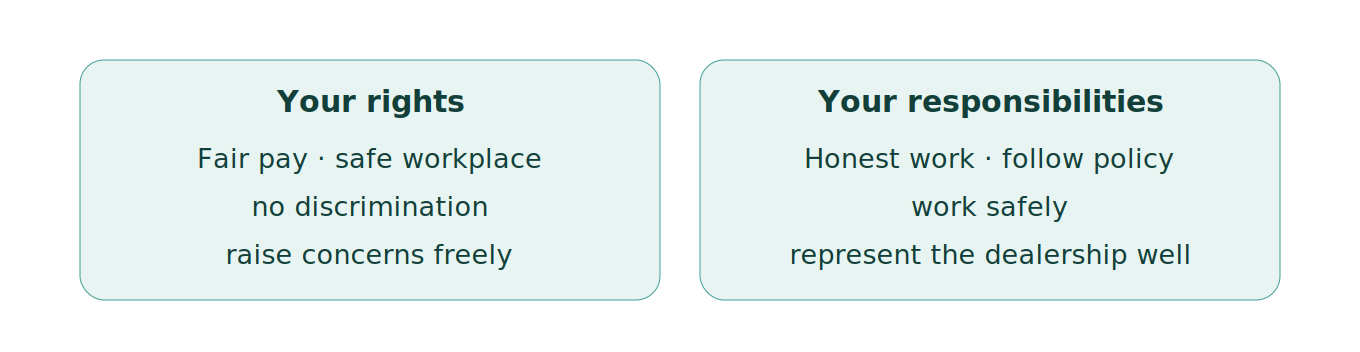
As an employee you have basic protections: to be paid correctly and on time for the hours you work (including overtime where it applies), to a safe workplace (the OSHA protections, the right to report hazards without retaliation), to be free from discrimination and harassment based on protected characteristics, and to the protections of the applicable employment laws (family and medical leave, disability accommodation, and others depending on your situation and location). You also have the right to raise concerns — about safety, about pay, about treatment — through the proper channels without being punished for it. Knowing these exist helps you recognize when a line has been crossed and to seek the right help.
Responsibilities you owe
The relationship runs both ways, and you owe the employer real responsibilities: doing honest, competent work for your pay; following the dealership’s policies and lawful instructions; working safely and following safety rules (which protect you and everyone around you); being honest and trustworthy (especially around cash, parts, and customer dealings); protecting the dealership’s and customers’ confidential information; and representing the dealership well to the customers who are the business. Meeting these isn’t just avoiding trouble — it’s being the kind of employee a dealership wants to keep, develop, and promote.
Handle problems through the right channels
When something feels wrong — a safety hazard, a pay problem, harassment, unfair treatment — the constructive path is raising it through the proper channels: your supervisor, HR, or the appropriate authority, using the dealership’s process. Documenting and reporting a genuine concern through the right channel protects you and gives it the best chance of being fixed, and retaliation for raising a legitimate concern in good faith is itself prohibited. For anything serious or unclear, getting proper guidance (HR, and where warranted, legal or the relevant agency) beats guessing or letting it fester.
Where it goes wrong
- Not knowing your basic rights and missing when a line is crossed.
- Treating responsibilities (safety, honesty, policy) as optional.
- Letting a genuine problem fester instead of raising it properly.
- Handling a serious issue by guessing rather than seeking proper guidance.
Related
What HR does in a dealership · Labor law and compliance · Workplace safety fundamentals · Ethics and doing right.
(General information, not legal advice; rights and obligations vary by location and situation — consult HR or a qualified professional.)