
Retention, Comp, and Benefits
In an industry where skilled people are scarce, keeping the ones you have is cheaper and more valuable than constantly replacing them — and retention is driven by more than pay. Understanding what actually makes people stay lets a dealership keep its talent without simply paying the most, which it often can’t.
Turnover is expensive; retention is a strategy
Losing a good employee costs the recruiting, the hiring, the ramp-up time, the lost productivity, and the knowledge and relationships that walk out the door — far more than the raise that might have kept them, and in a tight labor market the replacement may not exist. That math makes retention a deliberate strategy, not an afterthought: it’s usually cheaper and always more valuable to keep a good person than to replace them. A dealership with a revolving door pays constantly in hiring cost and lost capability; one that retains builds a deep, experienced, loyal team that serves customers better. Treating retention as a priority is treating the business’s biggest constraint seriously.
Competitive comp and real benefits matter
Pay and benefits have to be competitive — people won’t stay for well below market, and comp is the foundation the rest sits on. That means a fair, competitive wage or pay plan, and benefits that matter to the workforce (health coverage, retirement, time off, and the things that signal the dealership takes care of its people). Comp doesn’t have to be the highest in the market, but it has to be fair and in the range, because too far below it and no amount of culture keeps people. Getting comp and benefits right removes pay as the reason someone leaves, which lets the other retention factors do their work.
People stay for more than money
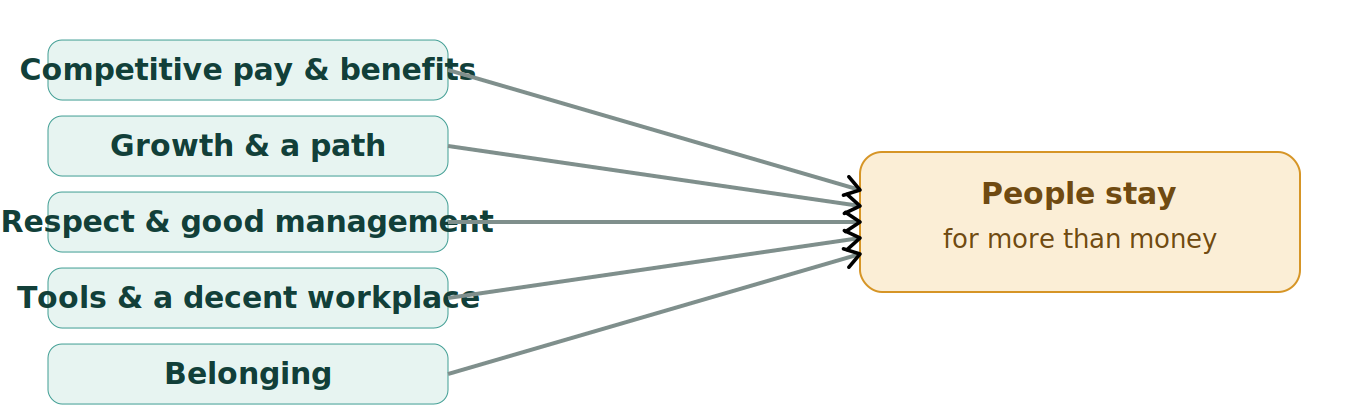
Beyond competitive pay, the strongest retention drivers are often non-monetary: growth (a real career path and development — people leave stagnation), respect and good management (people quit bad bosses more than bad jobs), tools and a decent workplace (techs especially value good equipment and conditions), recognition (feeling their work is valued), and belonging (a culture and team they’re part of). A dealership that pays fairly and develops people, manages them well, respects them, and builds a place worth working retains talent that a higher-paying but miserable competitor loses. The lever isn’t only the paycheck — it’s the whole experience of working there, most of which is within management’s control.
Where it goes wrong
- Treating turnover as normal instead of an expensive, avoidable cost.
- Letting comp drift too far below market and losing people on pay.
- Relying only on pay while ignoring growth, respect, and culture.
- Losing good people to bad management the dealership never addressed.
Related
Recruiting, leveling, and retaining technicians · Pay plans and incentives · Training and development · Culture and engagement.
(General information, not legal or compensation advice; follow your dealership’s plans and current law.)