
Culture and Engagement
Culture is what it actually feels like to work at the dealership day to day, and engagement is how invested people are in doing good work — and together they drive retention, performance, and the customer experience more than most managers realize. An engaged team in a healthy culture outperforms a talented one that’s checked out.
Engagement drives everything downstream
An engaged employee — one who cares about the work, is invested in the dealership’s success, and brings real effort and initiative — produces better work, better customer experiences, fewer problems, and stays longer. A disengaged one does the minimum, drags on the team, and is halfway out the door. Since the business runs on people serving customers well, the level of engagement directly shapes the CSI, the quality, the productivity, and the retention that determine the dealership’s results. Engagement isn’t a soft nicety; it’s a driver of the hard numbers, and it’s largely a product of how people are led and treated.
What builds engagement
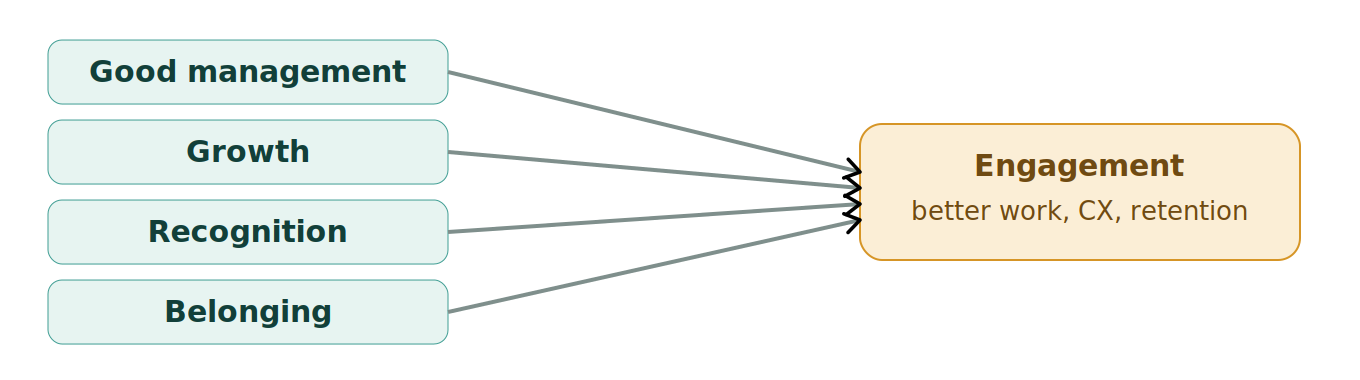
Engagement is built by the same things that retain people, working every day: good management (managers who lead well, communicate, and treat people fairly — the biggest single factor), growth (people invested in developing are invested in the work), recognition (feeling valued and seeing that good work is noticed), meaning (understanding how the work matters and where the dealership is going), and belonging (being part of a team and a culture worth being part of). None of these requires the deepest pockets; they require intentional leadership. A manager who leads well, develops people, recognizes good work, and builds a real team creates engagement; one who neglects people, plays favorites, or manages by pressure kills it.
Culture is the everyday reality, and it’s built
Culture — the actual norms, values, and feel of the place — is set by what leaders do and tolerate, not by what’s declared, and it either fuels engagement or drains it. A culture of respect, fairness, honesty, and genuine care for people and customers energizes a team; a toxic one (favoritism, disrespect, tolerated bad behavior, dishonesty under pressure) burns people out and drives the good ones away regardless of pay. Building a healthy culture is within leadership’s control and among the highest-return investments they can make, because it compounds into retention, engagement, performance, and the reputation that makes the dealership both a place people want to work and a place customers want to deal with.
Where it goes wrong
- Treating engagement as soft rather than a driver of hard results.
- Relying on pay while neglecting the management and recognition that engage people.
- Tolerating a toxic culture that burns out and drives away good people.
- Declaring values while the everyday reality contradicts them.
Related
Culture, vision, and employer brand · Retention, comp, and benefits · Coaching and one-on-ones · From peer to leader.