
Communication: Phone, Email, In-Person
Communication is the skill under every other one in this book — the best diagnosis, deal, or decision fails if it’s communicated badly. What matters isn’t the message you sent but the one the other person received, and matching the medium to the message is half the job.
The message received is what counts
You can be right and still fail if the customer or coworker didn’t understand, felt talked down to, or heard something you didn’t mean. Communicating well means being clear (say the thing plainly, no jargon the listener doesn’t share), confirming understanding (did it land the way you meant), and reading the other person — their knowledge level, their state, what they actually need to know. A tech who explains a repair in acronyms, a writer who buries the key point, a manager whose instruction was ambiguous all “communicated” and none got through. Aim for received, not just sent.
Match the medium to the message
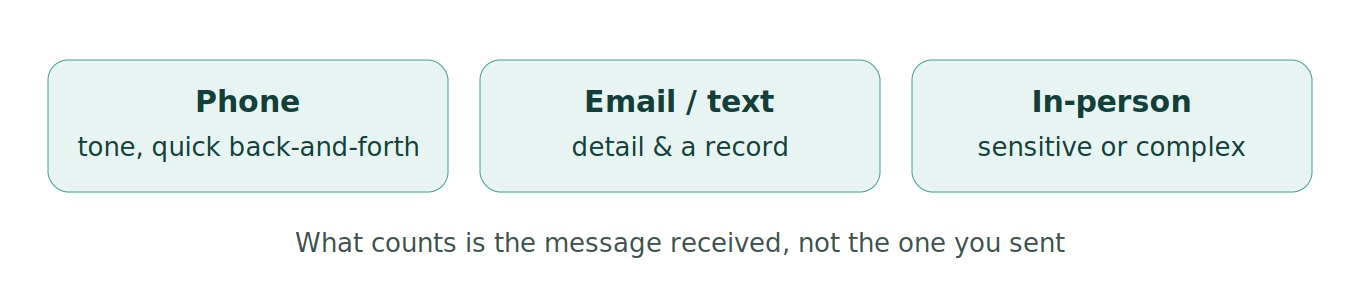
Each channel does different work. Phone is for tone and real-time back-and-forth — good for anything needing rapport, quick clarification, or a personal touch, where listening and a warm tone carry a lot. Email (and text) is for detail, records, and things the other person needs in writing — clear, concise, professional, and it documents what was said (a confirmed price, an approval, a summary). In-person is for the sensitive, the complex, or the relationship-building — a hard conversation, a big decision, a first meeting, where presence and body language matter. Using the wrong medium — a firing by text, a complex quote explained only verbally, a simple confirmation that took a meeting — creates friction the right channel would have avoided.
Professionalism carries across all three
Whatever the channel, the basics travel: be prompt (an unreturned call or email reads as not caring), be professional (courtesy and clarity, even under pressure), listen more than you talk, and follow through on what you said you’d do. In a relationship business, how you communicate is a big part of the relationship — the parts pro who calls back when promised, the writer whose quote is clear, the manager whose emails are respectful all build the trust the dealership runs on. Sloppy, late, or careless communication quietly erodes it.
Where it goes wrong
- Focusing on what you said instead of what the other person received.
- Using the wrong medium for the message.
- Jargon, ambiguity, or burying the key point.
- Being slow to respond or failing to follow through.
Related
Customer service excellence · Writing clear notes, work orders, and quotes · Working with farmers · Handling upset customers.