
Brand and OEM Brand Standards
A dealership carries two brands at once — the manufacturer’s and its own — and the OEM enforces standards on how its brand is presented. Getting this wrong isn’t a style quibble: brand-standard violations draw real attention from the OEM, and a muddled local identity wastes the reputation the dealership has built.
Two brands, one storefront
The dealership represents the OEM’s brand (the color, the logos, the look the manufacturer requires) and builds its own local brand (the dealership’s name, reputation, and relationships). Both matter: customers buy the manufacturer’s product and the dealership’s service and trust. The local brand is often what actually differentiates one dealer from another selling the same color — a customer chooses this green dealer over that green dealer on service and relationship, so the dealership’s own identity is worth cultivating alongside the OEM’s.
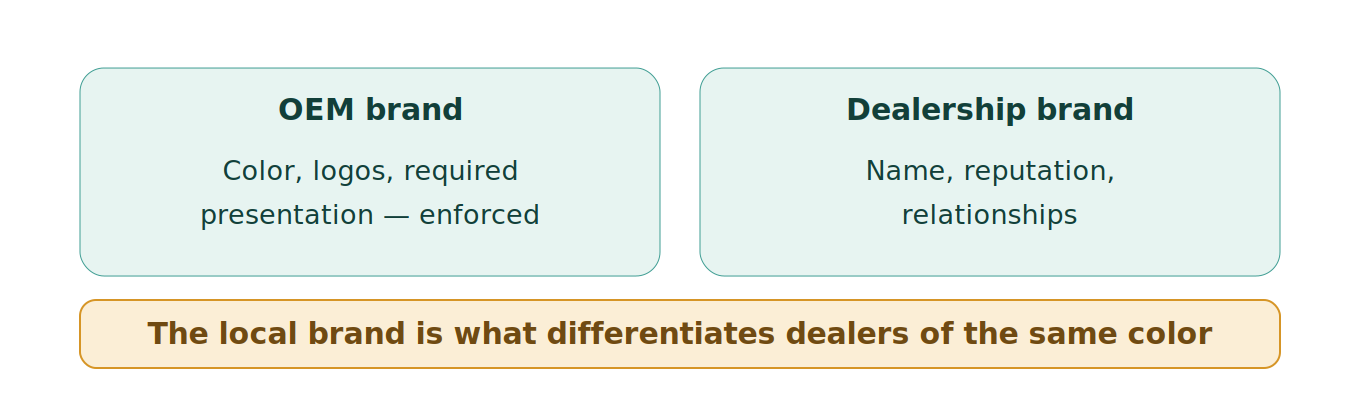
OEM brand standards are enforced
Manufacturers set brand standards — how their logos, colors, signage, facility appearance, and marketing present the brand — and they enforce them, tying compliance to the dealer’s standing and sometimes programs. Using the logo wrong, an off-standard facility, or marketing that violates guidelines draws real attention (the same way CSI and facility standards do). So dealership marketing works inside the OEM’s brand guidelines, using approved logos and assets and meeting the presentation standards, rather than improvising with the manufacturer’s brand.
Build the local brand within the rules
The room to differentiate is the dealership’s own identity — its reputation for service, its people, its community presence — built within the OEM’s standards, not against them. A consistent local brand (the same name, look, and promise across the website, signage, and every customer interaction) compounds the word-of-mouth reputation into something recognizable. Inconsistent or muddled local branding wastes that; a clear, consistent one reinforces it.
Where it goes wrong
- Violating OEM brand standards and drawing enforcement attention.
- Improvising with the manufacturer’s logos, colors, or facility standards.
- Neglecting the local brand that actually differentiates dealers of the same color.
- Inconsistent local identity across channels and interactions.
Related
How dealers and manufacturers work together · Co-op advertising with OEMs · Your website and local search · Dealership marketing basics.