
Email Marketing
Email is the most direct, lowest-cost line to a dealership’s known customers, and its power comes from the CRM: you already have the customers, what they run, and when their equipment is aging into a trade. Used well it’s targeted and welcome; used lazily it’s generic blasts people ignore.
The CRM makes email targeted
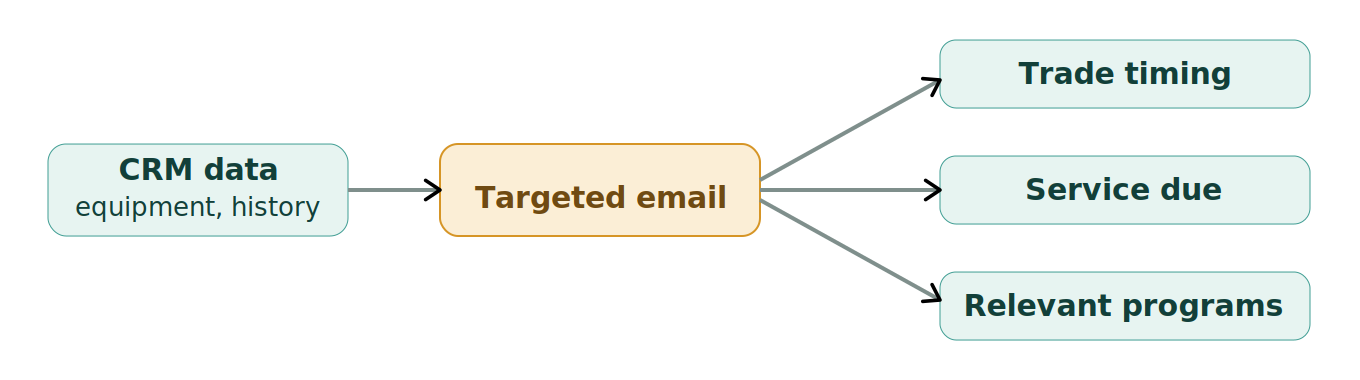
The reason email works so well for a dealership is that the audience isn’t rented — it’s the CRM’s own customers, with their equipment, history, and purchase patterns. That lets email be targeted rather than broadcast: a note to customers whose combine is aging into a trade while used values are strong, a service reminder tied to a machine’s hours, a program alert to the customers it actually fits, a parts promotion to the operations that run that equipment. Targeted, relevant email gets opened and acted on; a generic blast to the whole list gets deleted.
Relevance is the whole game
The difference between welcome and spam is relevance. A customer who gets an email about their machine’s service, a trade opportunity on their aging equipment, or a program that fits their situation sees a useful heads-up; the same customer getting an irrelevant mass promotion sees noise and tunes out — or unsubscribes. Segmenting the list by equipment, customer type, and timing, and sending each segment what’s relevant to them, is what keeps email effective. Lead with the customer’s interest, not the dealership’s.
Consistency, value, and the rules
Email works as a steady, valuable presence — seasonal reminders, genuinely useful information, timely opportunities — not a constant sales barrage that trains people to ignore it. Respect the basics: send what’s relevant, don’t over-send, honor unsubscribes, and follow email regulations. Done right, it’s a near-free channel that quietly generates leads and service business from the customers the dealership already has.
Where it goes wrong
- Blasting the whole list generically instead of segmenting by equipment and timing.
- Sending irrelevant promotions that train customers to ignore email.
- Over-sending until people tune out or unsubscribe.
- Not using the CRM’s equipment and history data to target.
Related
Using a CRM · Generating and nurturing leads · Your website and local search · Dealership marketing basics.