
Hazard Communication and SDS
A shop runs on chemicals — solvents, fuels, oils, coolants, cleaners, refrigerants, DEF — and hazard communication is how you know what you’re handling and what to do when it goes wrong. The part that saves people is knowing where the information and the emergency equipment are before the emergency.
Know before you need it
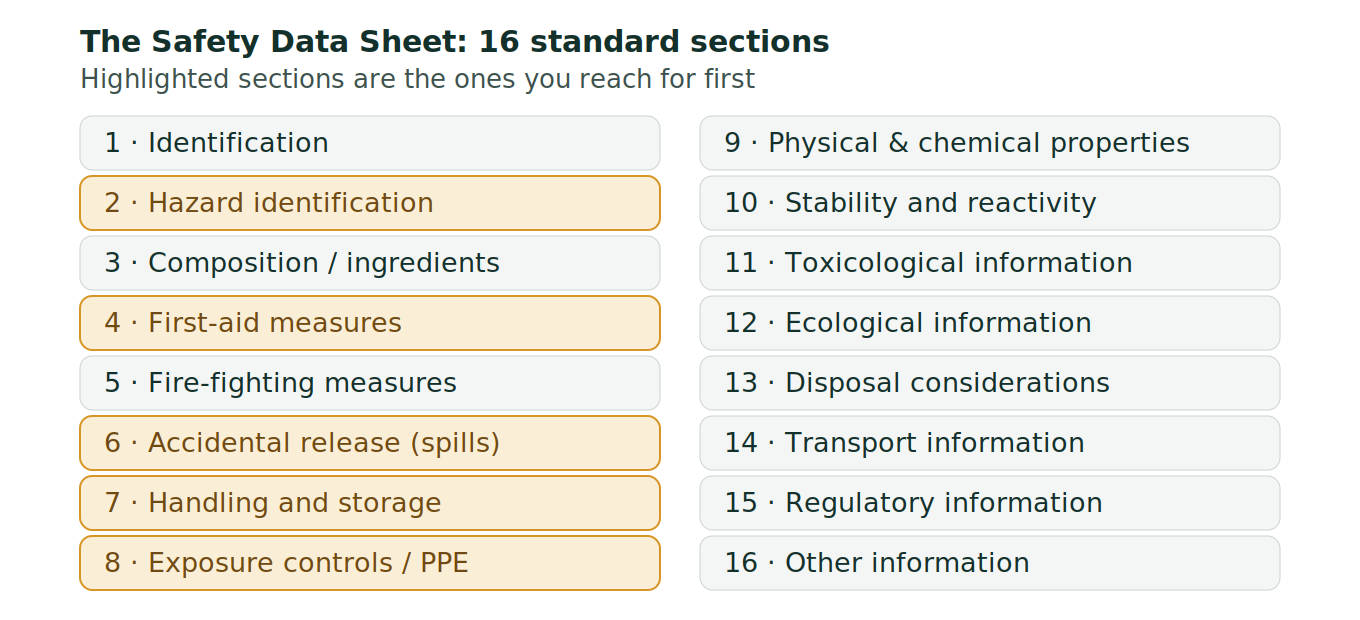
Locate the SDS (safety data sheets) and the eyewash station and safety shower on your first day, not while chemical is in your eye. When something splashes or spills, seconds count, and a person hunting for the eyewash or the SDS during those seconds is the person who gets hurt worse. Every hazardous product has an SDS covering its hazards, first aid, firefighting, spill response, PPE, and handling — read the ones for what you use.
Labels and containers
Containers stay labeled with their contents and hazards; an unlabeled container is a hazard because nobody knows what’s in it. Never store chemicals in unmarked or food/drink containers — that’s how someone drinks or mishandles something dangerous. Match storage to the chemical (flammables in flammable cabinets, incompatibles apart).
Right to know
You have the right to know the hazards of what you work with and how to protect yourself, and the dealership has to make that information available. Use it — the SDS answers the “what do I do if” questions before they’re urgent.
Where it goes wrong
- Not knowing where the SDS, eyewash, and shower are until an emergency.
- Working with a chemical without reading its hazards and PPE.
- Leaving containers unlabeled or using food containers for chemicals.
- Storing incompatible chemicals together.
Related
Handling fuel, batteries, DEF, chemicals · Environmental rules · PPE · Fire safety.