
Environmental Rules
The governing question for every fluid and waste in the shop is simple: where does it end up? Fluids that reach a drain, the ground, or water become a violation and a cleanup, and the penalties and liability are real.
Where it ends up
Nothing hazardous goes down a drain, onto the ground, or into water — not solvent, not coolant, not fuel, not oil. Used fluids are collected, stored properly, and disposed of or recycled through the right channels. The shop’s containment, drains, and waste storage exist to keep these out of the environment, and the discipline is never taking the shortcut of pouring something out.
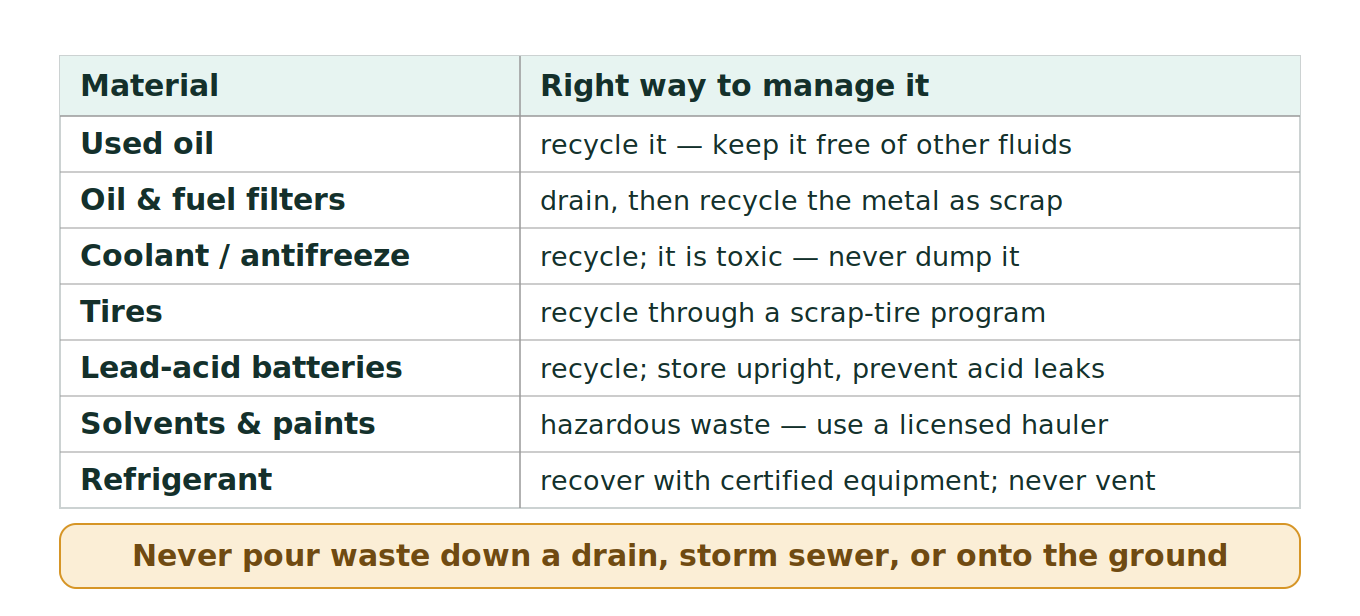
The specific ones
Used oil is recyclable, but contaminated used oil (mixed with solvent or other waste) becomes hazardous waste with stricter handling — don’t contaminate it. Coolant is toxic (to people, pets, and wildlife) and needs proper disposal. Venting refrigerant is illegal — it must be recovered with equipment by someone certified. Solvents, parts-washer fluid, batteries, and used filters each have handling and disposal rules. And oily rags tie back to fire — spontaneous combustion plus an environmental waste.
Spills
A spill gets contained and cleaned immediately, using the shop’s spill kit, and reported per policy. Keeping spills out of drains and off the ground is the same principle under time pressure.
Where it goes wrong
- Pouring any fluid down a drain, on the ground, or into water.
- Contaminating recyclable used oil and turning it into hazardous waste.
- Venting refrigerant instead of recovering it.
- Mishandling coolant, solvents, batteries, or filters.
(General information, not legal advice; follow your dealership’s policies and current regulations.)
Related
Handling fuel, batteries, DEF, chemicals · Cooling systems and coolant · Cab HVAC and refrigerant · Hazard communication.