
Incident Reporting: The Near-Miss Is the Gift
Every incident and near-miss is information the shop needs, and the reflex to not report — because it’s embarrassing, or nothing got hurt — is what lets the same hazard injure the next person. A near-miss is a free warning: the injury that didn’t happen this time, telling you exactly what to fix before it does.
Report everything, including the near-miss
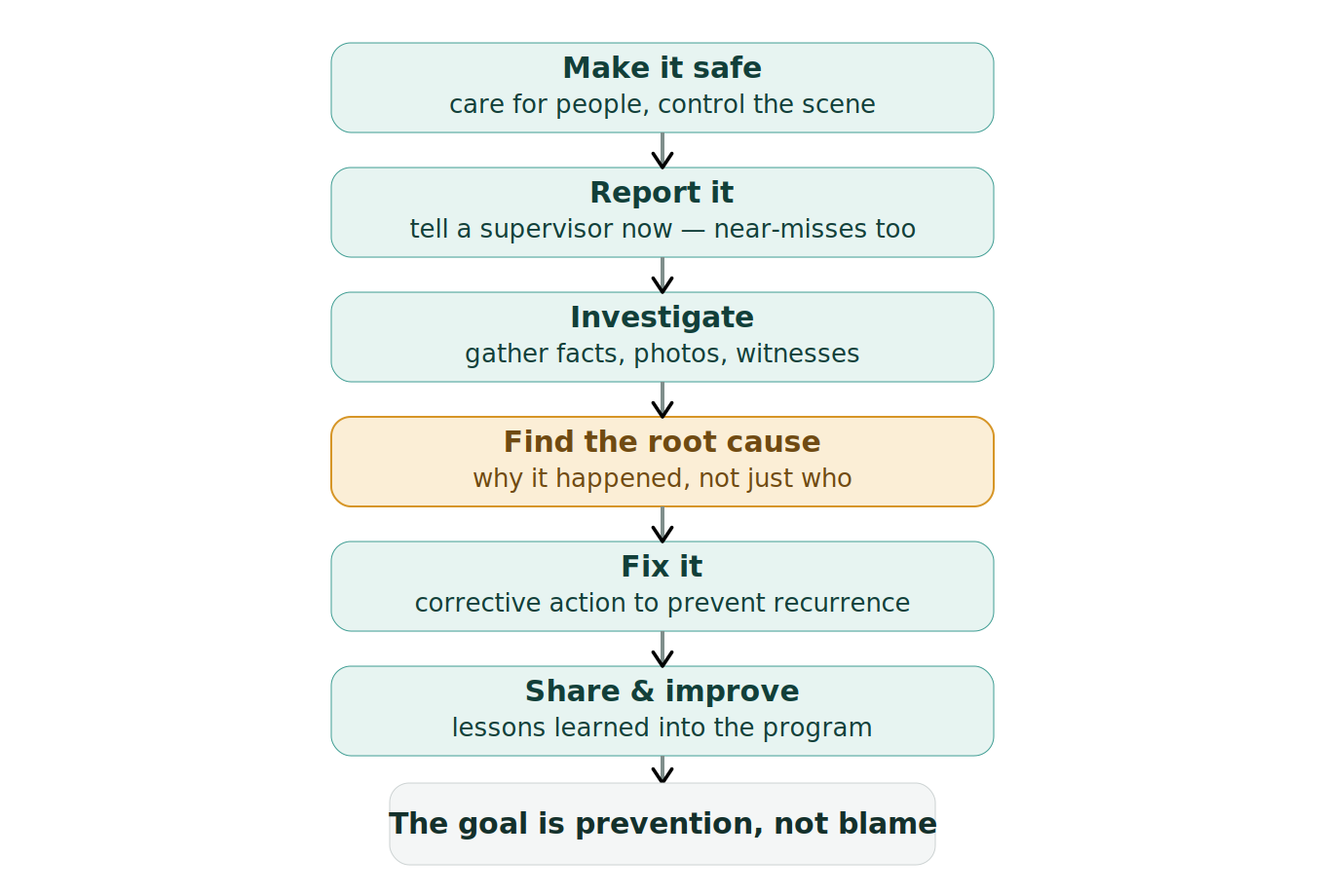
The near-miss (the slip that didn’t fall, the load that shifted but held, the part that almost let go) is the most valuable report there is, because it identifies a hazard at no cost. A shop that only records injuries is flying blind between them; a shop that captures near-misses fixes the hazards before they land. Reporting isn’t admitting failure — it’s how the shop gets safer.
Root cause, not blame
An investigation that stops at “the tech was careless” fixes nothing, because the same conditions will produce the same incident with the next person. Root-cause investigation asks what in the process, the equipment, the training, or the environment allowed it — and fixes that. Blame drives reporting underground; root cause makes the shop safer and keeps people reporting.
Don’t become the second victim
When something goes wrong, the instinct to rush in and help can create a second casualty — the responder who enters an energized area, a toxic atmosphere, or under an unstable load. Secure the scene and your own safety first; a rescuer who becomes a victim helps no one. Know the shop’s emergency response before you need it.
Where it goes wrong
- Not reporting because it’s embarrassing or nothing got hurt.
- Ignoring near-misses and losing the free warning.
- Stopping at blame instead of finding root cause.
- Rushing into a scene and becoming the second victim.
Related
Building a safety program · OSHA essentials · Shop and yard safety · Quality control and comebacks.