
Running a Field Service Program
A field service program is how the dealership delivers uptime where the customer actually works — in the field, when a machine is down and every hour counts — and run well it’s both a differentiator competitors can’t easily match and a genuine profit center. Run poorly it’s wasted trips and burned trucks. The difference is logistics.
Build the rolling capability
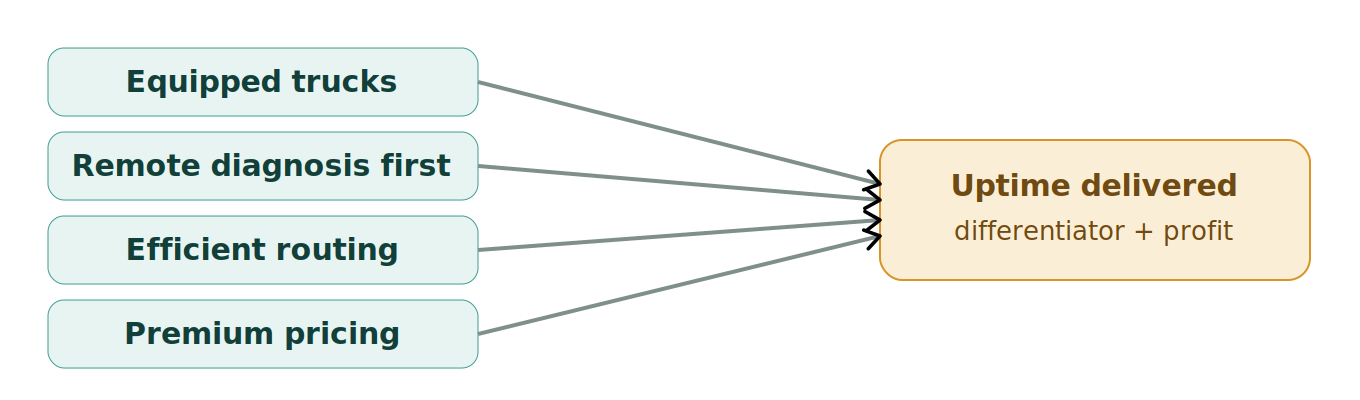
A field program is trucks equipped as mobile shops (tools, common parts, fluids, diagnostic gear), techs able to work away from the shop’s equipment, and a dispatch that gets the right tech and the right parts to the right machine. The recurring failure is the wasted trip — the tech arrives without the part or the tool — so the program lives on getting the diagnosis and the parts right before the truck rolls, which is exactly where telematics earns its keep by reading the machine’s codes remotely.
Price it as the premium service it is
Field service costs more to deliver — travel time, the truck, the premium of coming to the customer — and it’s priced accordingly (travel and mileage, a field rate). This isn’t gouging; it’s the value of the machine getting fixed in the field at harvest instead of being hauled in while the crop waits. Customers who understand what downtime costs them pay for field service willingly, and the program that prices it properly is profitable rather than a costly courtesy.
Route, coordinate, and deliver the promise
In a spread-out rural territory, drive time is the enemy — route calls efficiently, group them, and pair field repairs with nearby work. Coordinate tightly with parts (check the network before expediting) and with the shop schedule. And remember what the program is for: the customer whose machine got running in their own field remembers it and doesn’t shop their next purchase. Delivered well, field service is the uptime promise made real, and it sells the next machine as much as any salesperson.
Where it goes wrong
- Rolling trucks without diagnosing first and racking up wasted trips.
- Under-equipping trucks so techs constantly miss common parts.
- Underpricing field service and turning a profit center into a courtesy.
- Poor routing that burns the day in windshield time.