
Dispatching Technicians
Dispatch is where labor gets turned into billed hours or wasted, and the dispatcher’s judgment — which tech gets which job, and whether they can move straight to the next one — sets the shop’s productivity more than any individual’s speed. The goal is the right tech on the right job, never standing idle.
Match the tech to the job
Skill-match both ways: a complex driveline or electronic diagnosis goes to the tech who can do it right the first time, and the routine PM goes to someone whose time is cheaper than the master’s. Putting a junior on a job beyond them produces a comeback and a long troubleshoot; parking a master on oil changes burns expensive capacity. Dispatching to skill keeps quality up and cost in line.
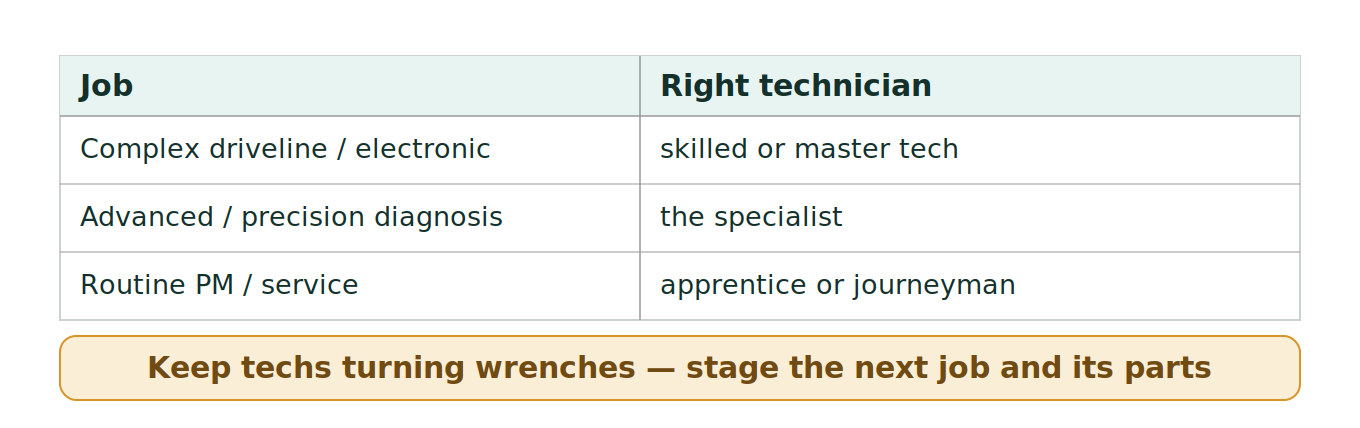
Keep techs turning wrenches
A technician standing at the parts counter, waiting on an approval, or hunting for the next job is billed-hour capacity evaporating. Good dispatch keeps the pipeline flowing: parts staged, the next job ready, approvals chased so the tech moves from one job straight into the next. The biggest productivity leak in most shops isn’t slow work — it’s techs idle between jobs, and that’s a dispatch and coordination problem, not a tech problem.
Balance load and watch the flow
Spread the work so no one’s buried while another’s light, keep an eye on jobs stalling (waiting on parts, approval, or a customer), and move to clear the blockage. The dispatcher sees the whole board and manages it as a system, which is exactly what individual techs can’t do from inside their own bay.
Where it goes wrong
- Mismatching job to skill and producing comebacks or wasted master-tech time.
- Letting techs sit idle between jobs waiting on parts or the next assignment.
- Overloading one tech while another is light.
- Not clearing stalled jobs off the board.
Related
Scheduling and loading the shop · The three tech metrics · Field and mobile service · Shop productivity and efficiency.