
Finance vs. Lease vs. Cash
The right way to acquire a machine depends on how the customer uses equipment, their cash and tax situation, and their trade cycle — and matching the method to the customer beats pushing whichever one the dealership prefers. Each has a place, and the customer’s own advisor owns the tax call.
The three paths
Cash buys outright — no financing cost, full ownership, but ties up capital a farmer often needs for operating expenses. Finance (retail installment) builds ownership and equity over a term, suiting a customer who keeps machines long and wants to own them. Lease provides use of the machine for a term at a lower payment, suiting a shorter trade cycle, customers who want to stay current on equipment, and situations where the lower payment or the tax and off-balance-sheet treatment fits — with the machine returned or purchased at the end.
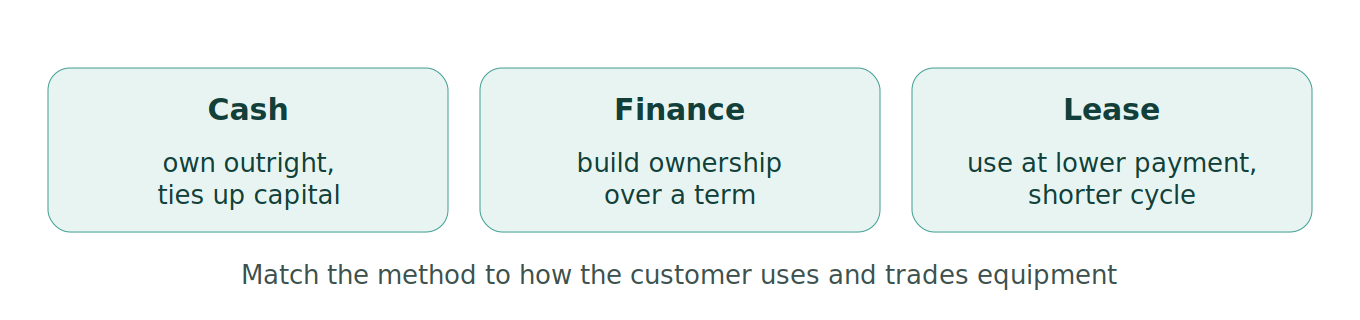
Match it to how they use and trade equipment
A customer who runs a machine 12 years and wants to own it is a finance (or cash) buyer; one who trades every 3–4 years to stay current is often a lease candidate; one flush with capital between harvests might pay cash but may still finance to preserve operating cash. The lumpy, harvest-driven cash flow argues for structures that fit the money cycle regardless of path (deferred and seasonal payments). Reading how the customer actually uses and cycles equipment points to the right method.
The tax and ownership questions are the advisor’s
Lease-vs-buy carries real tax and accounting implications — depreciation (Section 179, bonus), lease deductibility, ownership and balance-sheet treatment — and those are the customer’s accountant’s call, not the F&I office’s. Lay out the options and the payment realities honestly; point the tax decision to their advisor.
Where it goes wrong
- Pushing one method regardless of how the customer uses equipment.
- Ignoring the trade cycle in the finance-vs-lease conversation.
- Giving tax advice that belongs to the customer’s accountant.
- Overlooking the cash-flow fit of the payment structure.
Related
Financing and lease basics · Structuring deals · Understanding the farmer’s business · OEM captive finance.
(General information, not tax or financial advice; customers should consult their own advisors.)