
Fleet Management and Utilization
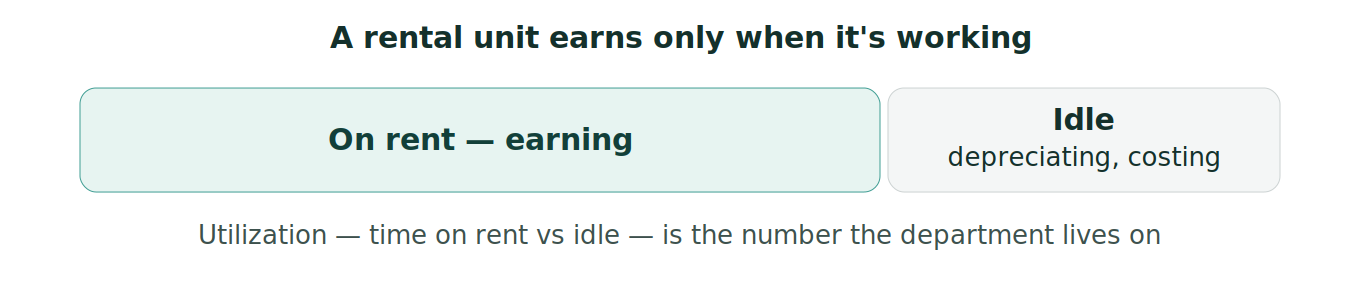
Utilization is the number the whole rental department lives on — the share of time the fleet is out earning versus sitting idle — because a rental machine is a large, depreciating asset that only makes money when it’s working. Manage utilization and the fleet is profitable; ignore it and you own a yard of assets losing money.
Utilization is the whole game
An idle rental unit still depreciates, still costs insurance and floor plan, and earns nothing, so every day on the yard is a loss against its carrying cost. Utilization — time on rent divided by time available — measures how hard the fleet works, and it’s the difference between a rental department that profits and one that bleeds. The target isn’t 100% (some idle time is unavoidable for maintenance and turnaround), but the department is managed to keep utilization high enough that the earning days cover the machine’s cost and the idle days.
Stock the fleet to demand
The fleet mix is a demand decision: carry the machines and sizes your market actually rents (compact equipment, seasonal supplements, the units customers try before buying), not units that sit. An over-large or wrong-mix fleet has low utilization and high idle cost; a right-sized fleet matched to real demand stays busy. Seasonality drives this hard — demand peaks with the crop calendar, so the fleet and its availability are planned around the windows when machines actually rent.
Manage the fleet as assets on a clock
Rental units have a rental life, after which they’re sold out of the fleet (often into used sales) before maintenance cost and reduced desirability erode their value. Managing when to buy into the fleet, when to sell out, and how to keep utilization high across the mix is running the fleet as a portfolio of depreciating assets — the same aging-and-turn discipline as used equipment, applied to machines earning by the hour.
Where it goes wrong
- Ignoring utilization and carrying idle assets that lose money.
- Stocking a fleet that doesn’t match real rental demand.
- Not planning fleet availability around the seasonal windows.
- Holding units past their rental life until value and desirability erode.
Related
Rental fundamentals · Rental department financials · Maintaining the rental fleet · Used equipment: aging and turn.