
Managing the OEM Relationship and Programs
The manufacturer relationship is one of the most important a dealer principal manages — it governs the franchise, the programs, the scorecard, and a lot of the dealership’s profit. Managing it well means hitting the standards that matter, working the programs for all they’re worth, and being a strong partner without being a pushover.
The relationship is a two-way partnership
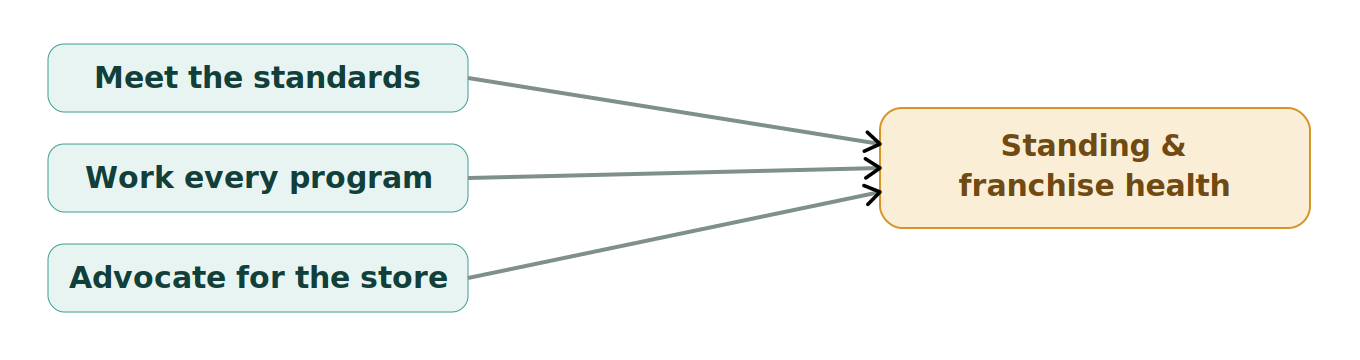
The dealer and the OEM need each other: the manufacturer needs strong dealers to represent the brand, sell, and support the product, and the dealer needs the product, the programs, and the franchise. Managing the relationship means being a genuinely good partner — hitting the sales, CSI, facility, and reporting standards the OEM measures — while also advocating for the dealership’s interests and not simply absorbing every demand. A dealer who performs well earns standing, better program access, and a real voice; one who underperforms the standards or treats the OEM adversarially loses leverage and sometimes the franchise itself.
Work the programs deliberately
The OEM’s programs — subsidized financing, co-op advertising, parts and service incentives, volume and performance bonuses, warranty — are a major part of the dealership’s economics, and they reward the dealer who works them and quietly penalize the one who doesn’t. Managing this means knowing the current programs, planning to qualify for and hit the bonuses and thresholds, using the subsidized financing and co-op the OEM funds, and filing warranty and claims correctly. Leaving program money on the table — an unclaimed co-op balance, a missed volume bonus, a subsidized rate not used — is forfeiting profit the dealership earned. The programs are the OEM funding the dealer’s success; the dealer’s job is to fully use them.
Manage the scorecard that decides standing
The OEM measures the dealership on a scorecard — market share in the AOR, CSI, facility standards, financial reporting, sales performance — and that scorecard drives the dealer’s standing, program eligibility, and the health of the franchise. Managing the relationship means managing to the scorecard: knowing where the dealership stands on each measure, working the weak ones, and understanding that these numbers are how the OEM sees the dealership. A dealer principal who treats the scorecard as the OEM’s report card to be managed deliberately protects the franchise and the programs; one who ignores it until a number triggers a problem is managing reactively.
Where it goes wrong
- Treating the relationship as one-way compliance or pure adversary.
- Leaving program money (co-op, bonuses, subsidized rates) unclaimed.
- Ignoring the OEM scorecard until a weak number causes a problem.
- Underperforming the standards that drive standing and program access.
Related
How dealers and manufacturers work together · Co-op advertising with OEMs · Subsidized financing and buydowns · Reading the scoreboard.