
Multi-Location Leadership
Running multiple locations is not running one store several times — it’s a different job of building consistency, developing local leaders, and balancing central standards against local judgment. Dealership consolidation has made this common, and the leaders who do it well build systems and people rather than trying to personally run every store.
You can’t be everywhere, so build systems and people
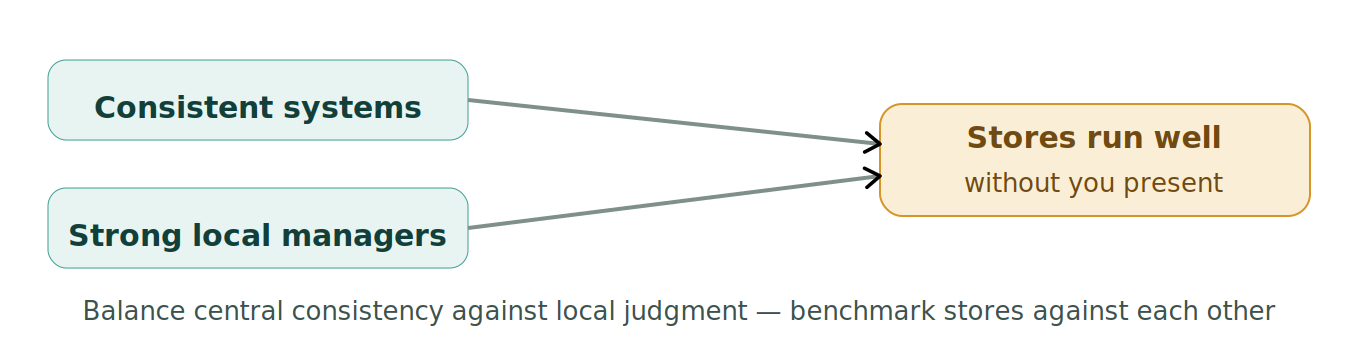
The fundamental shift from single-store to multi-location is that you can no longer be personally present for everything — the hands-on, walk-the-lot leadership that worked at one store doesn’t scale to five. Multi-location leadership runs on systems (consistent processes, standards, and reporting so each store operates well without the principal in the room) and people (strong local managers you trust to run each location). The leader who tries to personally manage every store from a truck seat burns out and manages none of them well; the one who builds good managers and good systems, then leads them, scales. Your job becomes developing and holding accountable the people who run the stores, not running the stores yourself.
Consistency without stamping out local judgment
Multiple locations need enough consistency that the brand, the standards, the systems, and the numbers are comparable and dependable across stores — a customer should get the same dealership experience at any location, and the principal needs comparable reporting to manage. But over-centralizing kills the local judgment and relationships that make each store work in its own market and community. The balance is standardizing what should be standard (core processes, standards, financial reporting, brand) while leaving local managers the authority to run their store, know their market, and make local calls. Too little consistency and it’s chaos; too much and you’ve smothered what makes each location succeed locally.
Compare, learn, and develop across stores
A real advantage of multiple locations is that they can be compared and learned from — benchmarking stores against each other surfaces what the best one does that the others could adopt, and spreads good practice across the group. And a group can develop people across locations, offering paths and moving talent where it’s needed. The multi-location leader manages the group as a portfolio: reading each store’s numbers against the others, spreading what works, developing leaders across the group, and allocating resources where they’ll do the most good.
Where it goes wrong
- Trying to personally run every store instead of building managers and systems.
- Too little consistency (chaos) or too much (smothering local judgment).
- Not benchmarking stores against each other to spread what works.
- Failing to develop the local leaders the whole model depends on.
Related
Whole-dealership financial management · Hiring and building a bench · Process improvement · Buying and selling dealerships.