
Counter Selling: Complete the Job
The parts pro who knows the machines and the jobs sells more and serves the customer better at the same time — because the add-on that matters isn’t upselling, it’s making sure the customer leaves with everything the job actually needs and doesn’t make a second trip.
Complete the job, don’t just fill the order
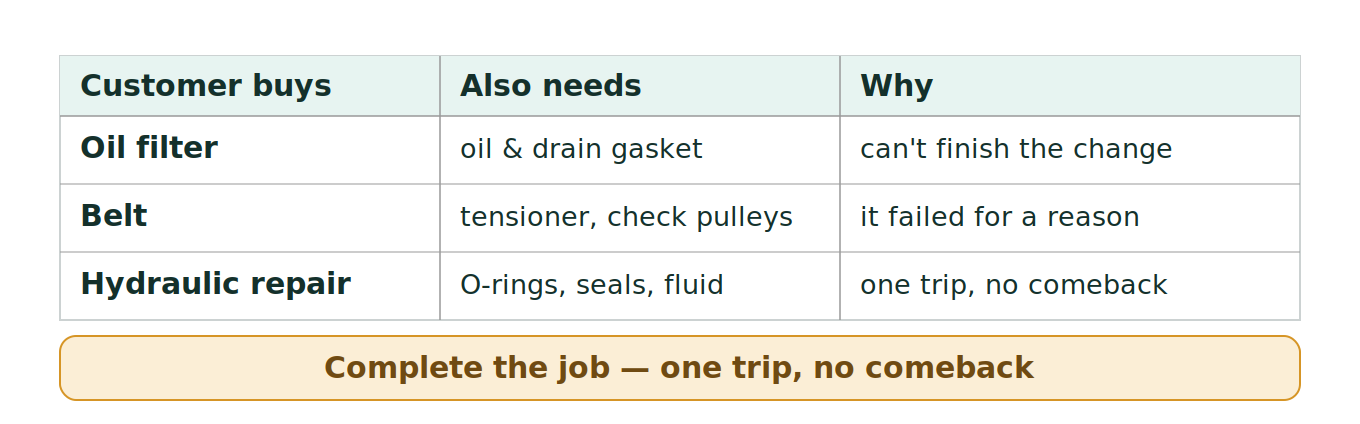
A customer buying a water pump needs the gasket, the coolant, and often the thermostat and hoses while they’re in there. Someone buying a hydraulic hose needs the fittings and the O-rings. Selling only what they asked for and letting them discover the missing gasket in the field — after the machine’s apart — costs them a trip and costs you nothing but the ask. The parts knowledge that catches “you’ll also need these” is both a bigger sale and a real service, and it’s the exact thing the exploded diagram is for.
Catch the wrong part before it’s sold
The other half of counter skill is stopping the customer about to buy the wrong thing — the part that won’t fit their serial range, the wrong spec, the thing that won’t solve their actual problem. Verifying the machine and asking what they’re fixing catches it before it’s a wasted trip and a comeback. A counterperson who saves a customer from the wrong part earns trust the sale never would.
Suggest what genuinely helps
Maintenance items due, the filter that goes with the oil, the wear part that’s clearly worn — suggested because they help, not to pad the ticket. Customers know the difference, and the honest “while you’re at it” builds the relationship; the pushy upsell erodes it.
Where it goes wrong
- Filling the order and letting the customer discover the missing gasket in the field.
- Not reading the job to know what else it needs.
- Selling a part without catching that it’s the wrong one.
- Padding tickets with add-ons that don’t help.
Related
Using the electronic parts catalog · The parts counter · Preventive maintenance · Serving the counter.