
Diesel Engine Fundamentals
A diesel makes power from three things — air, fuel, and compression — and nearly every running or starting complaint is a deficiency in one of them. Diagnosing by that framework, instead of guessing at parts, is what turns a vague “runs rough / no power / won’t start” into a found cause.
Air, fuel, compression
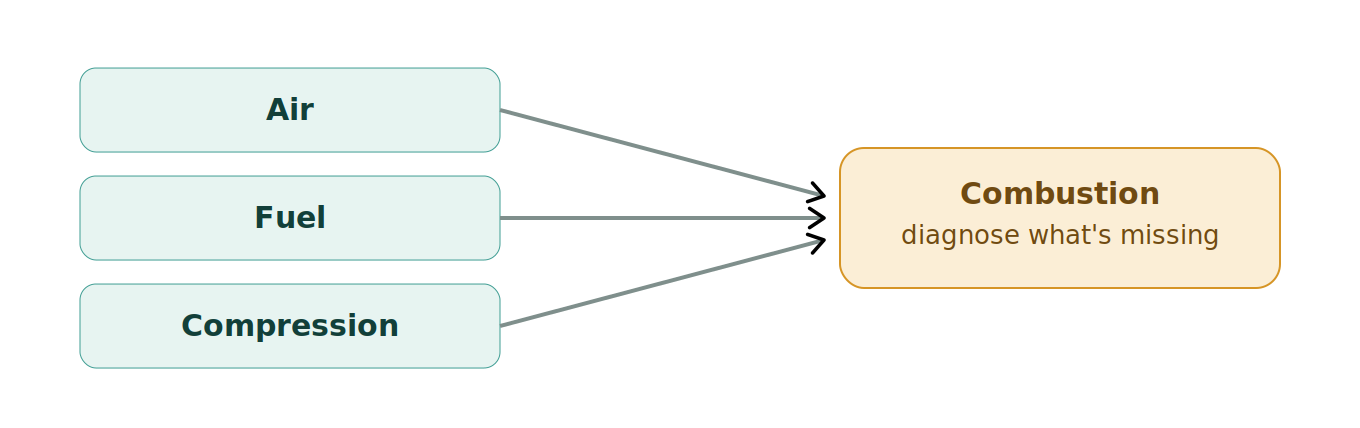
A diesel needs enough clean air (turbo, charge-air, and a breathing intake — a plugged air filter or a boost leak starves it), the right fuel delivered at the right time and pressure and clean, and adequate compression (the cylinder sealing to ignite the fuel — worn rings, valves, or a head problem lose it). A power or running complaint is almost always one of these, so the diagnosis starts by asking which: is it breathing, is it fueling, is it sealing. That framework narrows the machine fast.
Diagnose the system, don’t swap parts
“No power” gets misdiagnosed constantly by replacing parts on a guess. Worked as air/fuel/compression, it’s methodical: check air (filter, boost, leaks), check fuel (supply, pressure, quality, timing), check compression if the first two are good. Boost pressure, fuel pressure, and a compression or cylinder test are measurements that isolate the cause, and the fault codes and live data point where to look. Modern diesels are electronically controlled and heavily emissions-equipped, so the codes and software are part of the diagnosis, not separate from it.
Emissions systems are part of the engine now
DPF, EGR, and SCR are integral, and their problems present as engine problems — a regen issue, a plugged DPF, an EGR fault, or an SCR/DEF problem shows up as derate, poor running, or a warning. Diagnosing a modern diesel means including the aftertreatment, not treating it as a bolt-on, and never “deleting” it (illegal and warranty-voiding). The emissions lesson covers this in depth.
Where it goes wrong
- Guessing at parts instead of working air/fuel/compression.
- Overlooking a plugged air filter or a boost leak on a power complaint.
- Ignoring fuel pressure, quality, and timing.
- Treating the emissions system as separate from the engine diagnosis.
Related
Fuel systems · Fluids, filters, and DEF · Emissions systems · Reading fault codes.