
Fuel Systems
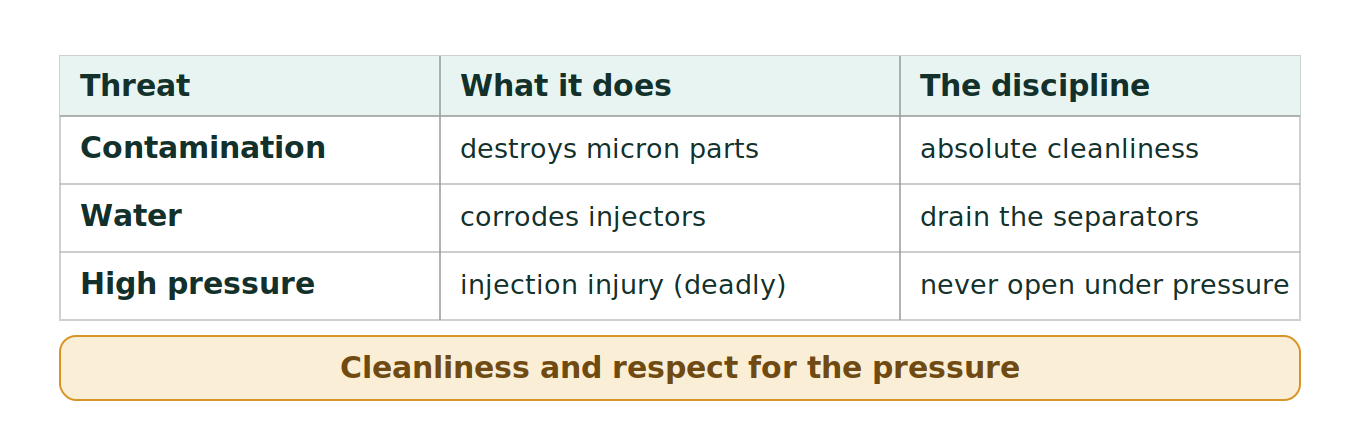
Modern diesel fuel systems run at extreme pressure through parts machined to microscopic tolerances, which makes two things non-negotiable: absolute cleanliness, and respect for pressures that inject fuel through skin. The most common self-inflicted failure is contamination destroying components that cost a fortune.
Cleanliness is everything
Common-rail injectors and high-pressure pumps have clearances measured in microns, and a speck of dirt or water that a lower-pressure system would tolerate destroys them. Contaminated fuel, a dirty fill, a bypassed filter, or careless work that lets dirt into the system ruins injectors and pumps — expensive parts killed by contamination that discipline would have kept out. Handle fuel-system work surgically clean: clean connections before opening them, cap open lines, use clean fuel and the right filters, and keep dirt and water out at every step.
Extreme pressure: injection injury
High-pressure fuel systems run at thousands of psi, high enough to inject fuel through skin — the same surgical-emergency injection injury as hydraulics. Never search for a high-pressure fuel leak with a hand, relieve pressure before opening the system, and treat any suspected injection wound as the emergency it is. The pressure that atomizes fuel will put it into your body.
Diagnose supply, pressure, and return
Fuel problems are worked by the system: adequate supply and lift pressure, correct high-pressure (rail pressure against spec, live on the software), injector performance (balance and return/leak-off tests), and quality/water in the fuel. Rail pressure and injector data on the diagnostic software isolate the fault far better than swapping injectors on a guess — and injectors are exactly the parts you don’t want to replace on a hunch.
Where it goes wrong
- Letting dirt or water into a common-rail system and destroying it.
- Bypassing or using the wrong fuel filter.
- Searching for a high-pressure fuel leak by hand.
- Replacing injectors on a guess instead of testing rail pressure and injector data.
Related
Diesel engine fundamentals · Fluids, filters, and DEF · Hydraulic and stored energy hazards · Diagnostic software.