
Brakes, Steering, and Axles: The Systems That Hold Lives
These are safety-critical, and on a machine weighing many tons on the road a failure isn’t an inconvenience — it’s a potential fatality. They tend to get neglected until they fail, and shortcutting them, or returning a machine with a known problem, puts lives at risk. This is where the repair gets followed exactly and verified before the machine leaves.
Why failure is catastrophic
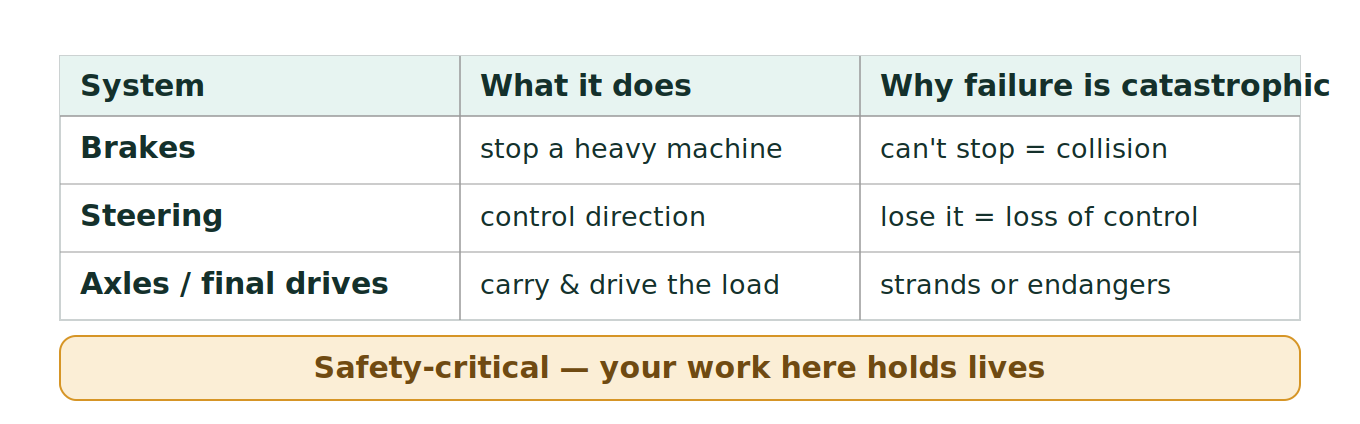
Brakes stop a machine that may weigh 20 or 30-plus tons, sometimes at road speed with an implement behind — ag machines often use hydraulic or wet (oil-immersed) brakes, and brake failure on that mass is a collision. Steering is usually hydraulic power (or hydrostatic) steering, and losing it on a heavy, fast machine is loss of control; because it’s hydraulic, hydraulic problems become steering problems. Axles and final drives — the final drives and planetaries — carry and transmit the machine’s power and weight, and a failure strands a machine or, at speed, endangers the operator.
Never neglect or shortcut them
Because they’re safety-critical, two disciplines are absolute. Inspect and maintain them — regular inspection catches wear before it becomes failure, which on these systems means before it becomes a disaster, and this is exactly the preventive value that matters most here. And never shortcut the repair — follow the procedure exactly, use the right parts, and verify, because there’s no acceptable margin on a brake or steering job.
Your work holds lives — verify it
The responsibility here is heavier than anywhere in the shop: a machine returned with a brake or steering problem, or an incomplete repair, can kill someone. So test the brakes, confirm the steering, and verify the repair before the machine leaves — a brake or steering failure isn’t a comeback risk, it’s a life-safety failure. When in doubt on these systems, you don’t send it; you make it right.
Where it goes wrong
- Treating safety-critical systems as routine jobs.
- Letting brakes and steering go without inspection until they fail.
- Shortcutting a repair or using the wrong parts.
- Failing to test and verify brakes and steering before the machine leaves.
Related
Hydraulics and hydrostatics · Preventive maintenance · Quality control and comebacks · Transport and road travel.