
Shop Equipment: Lifts, Presses, Jacks, Cranes
The shop’s own heavy equipment concentrates enormous force, and the injuries it causes are severe — a load off a jack, a press explosion, an overloaded hoist. Every piece has a rated capacity and a correct use, and the accidents come from exceeding one or ignoring the other.
Jacks lift, stands hold
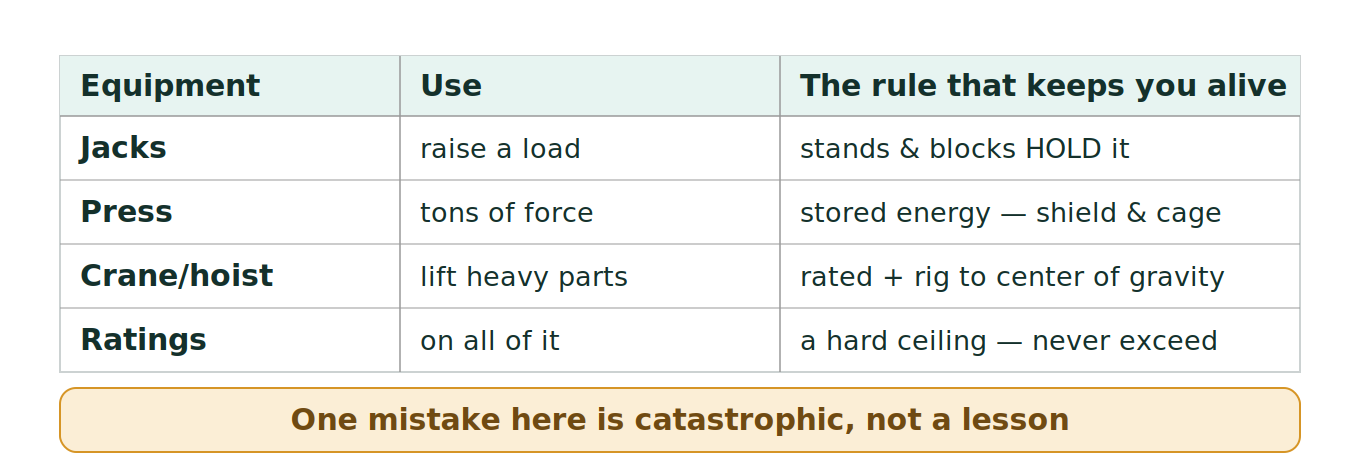
A jack raises a load and does not hold it — it can leak down, tip, or fail, and anyone under a load supported only by a jack is betting their life on hydraulics. Raise the load, then set it on rated jack stands or blocking before going under. On ag equipment the loads are massive and the rule is absolute.
Presses store violent energy
A hydraulic press builds tremendous force, and pressed parts (bearings, pins, bushings) can shatter or launch with lethal velocity — a shattered race becomes shrapnel. Use the shield, wear a face shield, keep body parts out of the line of force, support the work properly, and never exceed the press or the tooling rating. Press accidents blind and maim.
Hoists, cranes, and lifts to capacity
Hoists, cranes, and vehicle lifts have rated capacities that aren’t suggestions — exceed one and it fails under load. Rig to the load’s center of gravity so it lifts level and doesn’t swing or drop, respect the weakest link in the rigging, and inspect chains, straps, and hooks for damage before use. On a vehicle lift, set the pads at the manufacturer’s lift points and confirm the load is stable before going under.
Where it goes wrong
- Working under a load held only by a jack.
- Exceeding a press, hoist, crane, or lift rating.
- Standing in the line of force at a press without a shield.
- Rigging off the center of gravity or on damaged rigging.
Related
Safe lifting, jacks, and rigging · Shop and yard safety · Tires and stored energy · Lockout/tagout.